
Dark Souls Remastered Tutorial Boss Proves Too Hard for AI Learning Agents
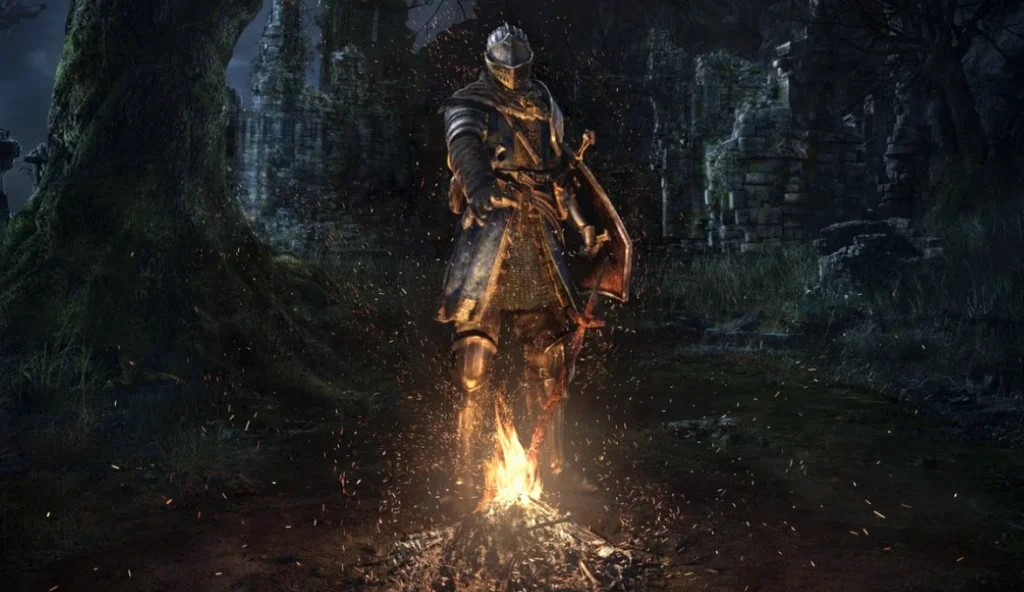
A new AI research project using Dark Souls Remastered as a learning benchmark reports a blunt result: the game’s early tutorial boss already proves too difficult for the tested learning agents within the study’s setup. Researchers built a dedicated evaluation environment around Dark Souls boss fights, pitting multiple AI approaches against specific encounters and tracking wins, damage dealt, and how long the “player character” survived.
Announcement: Dark Souls boss fights used as an AI benchmark
Researchers from Connecticut College ran experiments in which different AI agents were matched against bosses from Dark Souls Remastered. The Dark Souls Learning Environment (DSLE) includes all 22 bosses as potential benchmarks, but the study narrowed comparisons to five specific fights to represent different combat pressures.
The five targeted bosses were:
- Asylum Demon
- Capra Demon
- Chaos Witch Quelaag
- Ornstein & Smough
- Gwyn
What changed: AI methods were tested under the same win/loss rules
The evaluation criteria were straightforward: win or loss, plus additional metrics (damage inflicted and how long the character survived). Across the tested agents, difficulty varied by encounter type—close-quarters danger, very fast combat patterns, and hazardous arenas—but the overall outcome was consistent: none of the approaches managed to outperform the tutorial boss within the allowed parameters.
- The study used DSLE, an environment covering 22 Dark Souls Remastered bosses, with five chosen for detailed comparison.
- Performance was measured by win/loss, alongside damage dealt and survival time.
- Even the best tested learning agents struggled to consistently beat the early tutorial encounter under the study’s constraints.
Practical impact: “Random” failed, reinforcement learning struggled, SCOPE led
Results varied sharply by agent type. A “random” action generator—producing actions via random selection—recorded no successful boss fights at all. A more rule-driven “expert” agent did better, but still not at player-skill levels: it beat the Asylum Demon in 63% of attempts.
The study’s reinforcement learning systems performed worse than expected overall. PPO defeated the Asylum Demon only 5 times across almost 2,000 attempts, while DQN managed 8 victories in just under 2,500 attempts.
The best-performing approach was an experimental agent called SCOPE. It achieved the most boss engagements and produced the strongest overall results among the tested methods. For the Asylum Demon specifically, SCOPE succeeded in about 1 out of every 5 attempts (with the best generation reaching 43%).
Researchers then stressed SCOPE further by increasing all character stats to 50 (rather than using the starting-character stats). The intent was to see whether better baseline conditions would let the AI handle the broader set of bosses. Even with the improved stats and stronger life, stamina, and damage output, the agent still did not land victories against most of the bosses—meaning the setup did not enable sufficient learning progress to master the encounters within the study’s framework.
Platform scope: single-player boss fights in Dark Souls Remastered
This work is scoped to Dark Souls Remastered boss encounters inside a controlled benchmark setting. The project is not presented as an attempt to build a universal AI that can “brute-force” FromSoftware’s hardest bosses. Instead, it’s framed as a test track for comparing AI learning approaches using standardized boss benchmarks, including early-game challenges that already expose learning limitations.
What comes next: comparing AI progress on easier games
The researchers’ findings also raise a broader question: how would these AI learning methods perform in games that are not as punishing as Dark Souls? Since the test uses one of the most difficult action RPG series as its proving ground, the study suggests future comparisons may focus on less demanding titles to better evaluate whether the learning systems can actually progress beyond early failures.