Duskfade Review: Weird Beluga’s PS2-Era 3D Platformer Brings Clockpunk Nostalgia
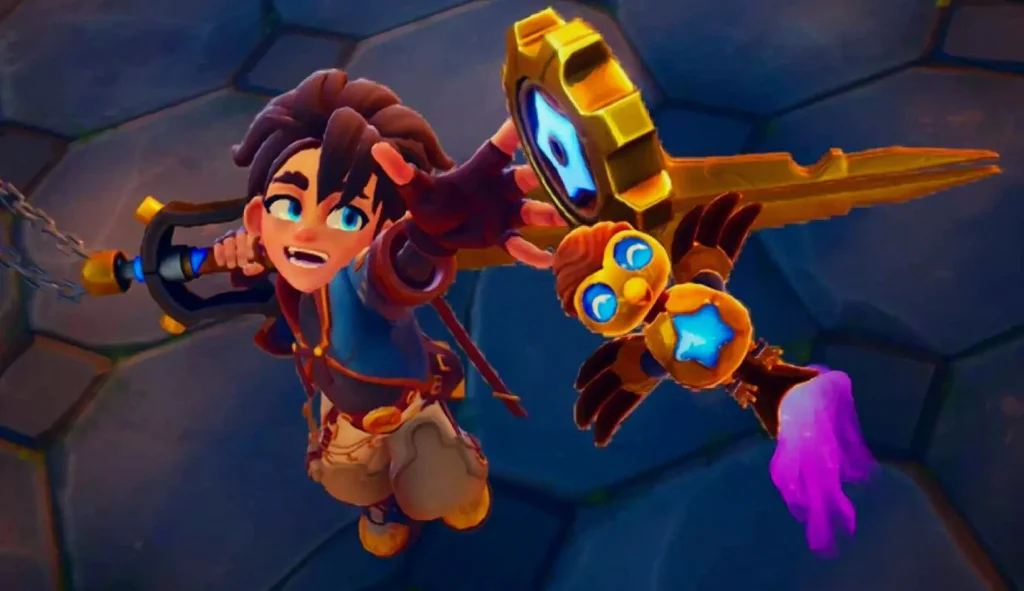
Weird Beluga’s 3D platformer Duskfade is landing as a nostalgia-forward tribute to early-2000s action adventures, with a clockpunk fantasy world, a mission-style progression, and a gameplay loop that shines in platforming while struggling more in its combat feel. The game is priced at 29.99 euros and includes a free playable demo across its listed platforms.
Story, world, and platforming design in Duskfade
Duskfade is set in a magic-filled realm where Zirian and his small automaton companion Cuco get pulled into a crisis: Tick Town is threatened by a colossal, mysterious tower. Zirian learns that Allira, his sister, is trapped inside, pushing the pair to break four major seals to free her.
As Zirian and Cuco travel through different areas, the game also explores the history of the famous Clockwork Masters. While the overall tone leans youthful, the narrative adds “small layers” of seriousness through flashbacks involving both siblings, focusing on themes like guilt, fear of loss, and obsession.
Visually, the game’s identity is built around three core pillars:
- Clockpunk aesthetics featuring ornate mechanical clockwork design, gears, and functioning-looking components.
- Colorful, PS2/GameCube-era style, drawing on the look and mood associated with games like Spyro, The Legend of Zelda, and Super Mario Sunshine.
- Direct inspiration from early-2000s favorites, including elements such as Minutero (Zirian’s sword) echoing the “Keyblade” concept from Kingdom Hearts, a robot partner resembling Ratchet & Clank-style companions, and outfit/world nods compared to Link-like references and occasional atmosphere similar to Alice: Madness Returns and Epic Mickey.
Despite some concerns about originality, the references are described as being handled carefully and integrated into the overall “tribute” feeling. The art direction and presentation are also praised as being well-managed for a smaller team.
In terms of size, the game is estimated at around 15 hours—not just in length, but also in scope, with larger areas than expected for a small Spanish indie. The progression follows a classic template: clear segments within a level, defeat intermediate bosses, gain a power, reach another level area, face a final boss, and break a chain to unlock a new section in the central hub. Each unlock then grants access to more NPCs and the next platforming stage.
Some repetition is noted, but the structure helps tie systems together. Levels include light backtracking, encouraging revisits for collectibles—later exchangeable for items like outfits, tints, or cards.
Platforming controls are described as feeling good: Zirian’s jump physics are “lax,” with added floatiness that makes airborne movement satisfying. There are also phases “on rails” that refresh the experience and demand quick reactions.
Combat drawbacks, performance notes, and boss strengths
While the platforming is a highlight, Duskfade runs into problems in combat. Battles are frequent enough to be noticeable, but the combat is also described as lacking impact: hits don’t feel particularly “heavy,” early combos can become repetitive (especially in the first two worlds), and stronger strikes are too slow. Enemy variety among standard foes is also said to be limited, contributing to monotony.
Feedback and targeting are another issue. The enemy lock-on can become disorienting in fights with many targets on screen, particularly when switching objectives. The camera may “shake” more than expected in those moments.
There are also platform-specific performance observations for Nintendo Switch 2. The game runs at 40 fps in handheld and 60 fps in dock mode, though the report notes occasional frame drops, while performance is said to remain fairly stable overall in that context.
Bosses, however, are described as much better constructed. They’re not portrayed as extremely difficult overall, but their fights include more interesting phases and platforming moments. One exception is called out as the game’s biggest challenge: chasing collectible cats.
Release details and what to watch next
Duskfade is available digitally on PS5, Nintendo Switch 2, Xbox Series X|S, and PC for 29.99 euros. A free playable demo is also available on all of those platforms.
For players deciding whether to jump in, the clearest takeaway from the evaluation is that the game delivers its promise as a tribute platformer—especially through its world style, level breadth, and platforming feel—while combat and supporting combat utility (including how powers and artifacts feel in practice) are the areas most in need of improvement.