Sean Murray Says No Man’s Sky Turned a Corner After Update Testing Got Smooth
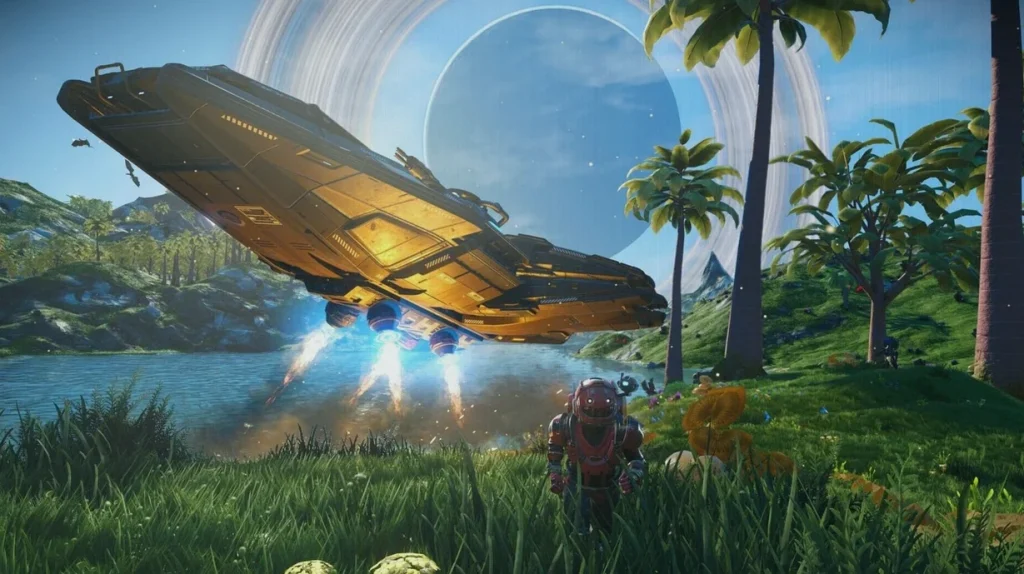
A decade after No Man’s Sky’s troubled launch, Hello Games founder Sean Murray says the moment the team finally felt it had the game back under control wasn’t about awards or review scores—it was about how updates were being discussed, and how smoothly the studio could test new content. Murray points to a shift that began after the worst of the backlash, continued through years of patching, and became unmistakable in early 2019.
From launch backlash to a turning point
No Man’s Sky launched 10 years ago with a widely disappointing debut that helped drive some of the harshest Steam reception figures in the platform’s history. A portion of players accused the developer of misleading marketing, and confidence in the project looked fragile. Over time, the picture changed: today the game sits at 83% positive reviews on Steam and continues to draw a dedicated community.
-
First 2–3 years after release: Murray describes an ongoing “joke” inside the team. In that period, press coverage and player conversations were often framed as if the game’s updates should begin with references to the original launch—before anyone got to the new features.
-
After that window: the studio saw a change when articles started focusing on updates without mentioning the launch first. Murray says that was the signal that helped him “breathe a sigh of relief,” because it suggested the team’s work was finally being treated as actual development rather than an ongoing debate about what the game used to promise.
-
2016: expectations were at their lowest point, with many observers treating the title as one of the biggest disappointments in the industry.
-
2017: sentiment began to improve compared with 2016.
-
First half of 2019: Murray says this is where it became fair to say No Man’s Sky was truly getting back on track.
What made success feel real to Murray
In the same interview, Murray stresses that the studio didn’t reach “we’re doing the right thing” certainty because of peak moments after the Beyond era or because of prizes tied to the game’s evolution. Instead, he highlights two practical signs: how the team’s testing process matured and how rapidly it could iterate on new content.
Murray recalls that at one point the whole studio finally started testing new material efficiently and with genuine excitement—focused on whether players would enjoy it. He also describes an intense stretch where the team produced 27 hotfixes within a single week, framing it as the kind of period where he drove home from work energized rather than drained.
For Murray, that combination—faster, more confident iteration alongside a belief that players would respond positively—was the clearest evidence that Hello Games had found its footing again. He also notes the emotional pressure of the early “redemption” years, when outside predictions about the game’s death were common and the future of the studio often felt uncertain.
Community momentum and ongoing support
Murray’s comments also line up with the game’s later momentum. He notes that a recent anniversary update brought more than 110,000 concurrent players on Steam, even though No Man’s Sky is also available on Game Pass. He adds that another free expansion is on the way.
While acknowledging that No Man’s Sky still has issues and that the original launch remains a permanent part of its reputation, Murray’s overall message is that the game no longer fits the label of failure or the era’s biggest disappointment. For Hello Games, the defining “proof” wasn’t a single headline moment—it was the gradual disappearance of the need to justify the update before talking about the content itself, followed by years of work that eventually made the studio’s process feel like it belonged to a long-term living game.