Ex-Rockstar Dev Kris Roberts Claims RDR Crunch Was to Impress Executives
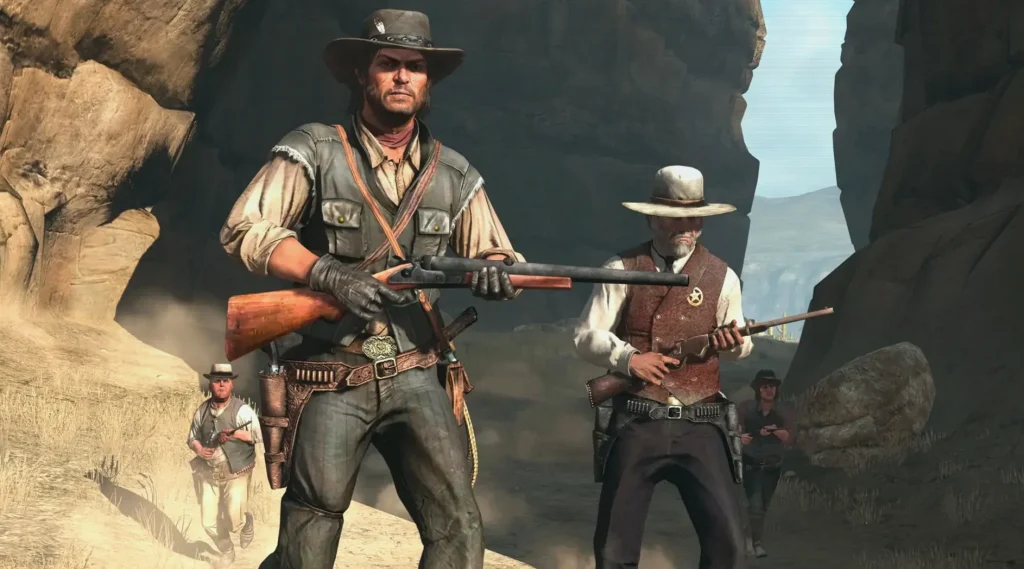
A former Rockstar developer, Kris Roberts, has opened up about what he says was the industry’s worst period of “crunch” during the making of Red Dead Redemption—claiming the extended hours weren’t mainly about solving technical problems, but about impressing visiting executives. In a recent interview, Roberts also described how expectations expanded over time, turning “fixed schedules” into full daily work weeks and leaving him with little clear memory of the final stretch.
What “crunch” is, and why Roberts says it goes beyond “fixing bugs”
Roberts frames crunch as a period where a studio pushes employees into intense working hours to speed up creative output. In his telling, it often isn’t just about addressing urgent production issues after the fact.
- He argues the purpose was sometimes closer to “showing” executives that the team was fully present.
- He contrasts this with the idea that crunch is used to solve concrete development problems.
Roberts’ role at Rockstar: from vehicle tuning to multiplayer design
Roberts says he spent many years at Rockstar working on vehicle tuning for Midnight Club and later led multiplayer mode design for Red Dead Redemption. He describes the period leading into the latter project’s final months as exceptionally damaging.
- Vehicle tuning work on Midnight Club
- Leadership of multiplayer mode design for Red Dead Redemption
The “worst” crunch period: the last six months of Red Dead Redemption
Roberts specifically claims that the final six months of Red Dead Redemption were the worst crunch period he experienced in the video game industry. He describes the working rhythm as so intense that his final stretch became “blurry,” with very little memory of what was happening day-to-day.
He also says he worked in a structure Rockstar described as a “fixed schedule,” and that the schedule kept expanding over time until, in his account, everyone was working every day.
How the work schedule expanded over time (as Roberts describes it)
In his interview, Roberts recounts a progression where “fixed hours” grew wider and more demanding, including Saturdays and eventually daily full-day work.
- Employees were expected to be at the studio by 9:30 and stay until 06:00.
- If staff stayed later, dinner would be available.
- The “fixed schedule” later expanded to include half-days on Saturdays, with an expectation staff would be there.
- After that, Saturdays became full workdays.
- Sundays were described as “optional,” but Roberts says they were still strongly encouraged.
- In the end, he says the team worked “the full day” every day.
Examples Roberts gives: emails that set weekend expectations
Roberts offers a specific example of how leadership messaging could tighten weekend expectations. He recalls a late Friday email stating that the team needed to be at the studio that weekend, with additional clarification that “weekend” didn’t mean only Saturday.
- He says Direction sent an email late Friday requiring presence over the weekend.
- He says another message clarified that it didn’t mean only Saturday.
- He describes being told at 16:30 on Friday to come in on Sunday “no matter what.”
Why he says it was “for the show,” not to solve development issues
Roberts’ central claim is that crunch was sometimes used for appearances—creating the impression that everyone was present continuously because executives were visiting—rather than to solve production problems.
- He says it wasn’t to address issues like “Bugstar.”
- He characterizes it as a performance to ensure the team appeared fully active during executive visits.
“Artificial” incidents and visits from executives
Roberts also alleges that Rockstar ordered “everyone to get to work,” triggering overtime during specific incidents tied to executive visits. He names Sam Houser and Leslie Benzies in connection with these visits in his account.
- He describes incidents as “artificial,” tied to executive visits.
- He says executives such as Sam Houser and Leslie Benzies visited during these periods.
Why he says the experience pushed him to leave
Roberts describes leading a multiplayer design team and says that when he had to communicate these expectations, he sometimes preferred not to go through with it. He even claims he would leave the studio in some situations.
- He says he sometimes would tell the team he didn’t want to do it.
- He jokes that this was “one of the four main reasons” he left.