Splatoon Raiders Review: Nintendo Sets July 23, 2026 Switch 2 Release Date
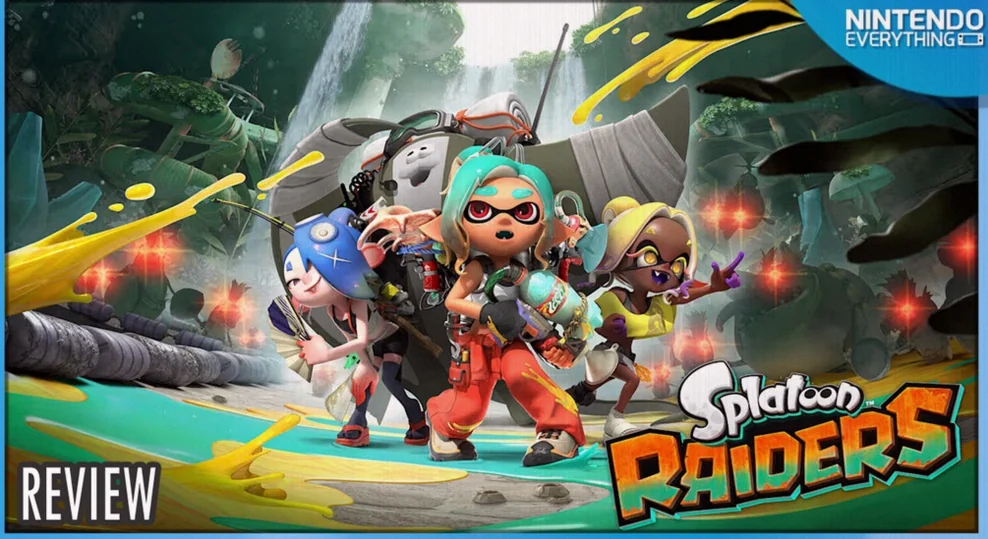
Nintendo has set a July 23, 2026 release date for Splatoon Raiders on Switch 2, bringing a new single-player-focused take on the Salmonid-focused action players know from the series’ co-op mode—while still offering meaningful multiplayer for those who want to tackle raids together.
What to expect in Splatoon Raiders
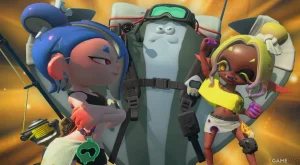
Although the numbered Splatoon games are built around competitive, high-speed battles, Splatoon Raiders leans into a story-style campaign set on the Spirhalite Islands. The premise centers on Shiver, Frye, and Big Man of Deep Cut as they search for treasure, only to crash-land and rely on the player—acting as a mechanic—to help them push back enemy Salmonids and claim loot.
Gameplay blends mission-style progression with Salmon Run-style combat. The game includes a wide mix of familiar Salmonids from Splatoon 3, but they’re paired with upgraded designs and more dangerous variants, alongside brand-new Salmonids introduced for this entry.
Enemy variety, bosses, and mission pressure
One of the campaign’s key challenges is prioritization: as multiple Salmonids crowd the battlefield, players must decide which threats to eliminate first. Splatoon Raiders also features several new bosses, and they’re described as new encounters rather than simple re-skins of the King Salmonid-style foes from Splatoon 3.
Customization that changes how runs feel
The campaign is built around extensive loadout customization. Players can choose from a large set of weapons and gadgets, and also select between three tank roles—speed, power, and tactics—which grant access to different gadget sets. The result is that builds are expected to vary heavily from player to player, changing the way missions play out.
Gadgets include standout options such as Flywire, which sticks to walls and lets you charge forward in a manner compared to the Zipcaster special from Splatoon 3. While most levels focus on fighting Salmonids, the game also includes light exploration elements.
Where you play: islands, “grounded” stages, and obstacle zones
The campaign’s level design is described as more grounded than prior Splatoon story modes. Instead of most stages taking place in blocky, artificial spaces, Splatoon Raiders sends players across islands, glaciers, and volcanoes. Even so, some portions still lean abstract—often presented as obstacle-course-style challenges with preset weapons and gadgets.
Difficulty options and what they change
Splatoon Raiders includes easy, normal, and hard difficulty settings. These options do not change the loot you receive; they only increase the strength of Salmonids. The game is described as getting notably difficult even on normal if players aren’t sufficiently leveled.
Postgame content and flexible co-op
After the main campaign, Splatoon Raiders offers an extensive postgame filled with remixed levels and a steep difficulty ramp. The full experience is estimated at around 50 hours to complete.
- Players can access postgame remixed stages with the difficulty pushed further beyond the main run.
- Despite being single-player-first, many levels can be played with friends.
- When playing in a lobby, Salmonids receive buffs based on how many players are present so raids don’t become too easy.
- Each player’s individual difficulty setting is retained for the Salmonids they face, helping keep the co-op experience accessible.
Music and overall reception
The game’s soundtrack is framed as deliberately unnerving, with mission music sometimes featuring odd vocals and screaming-like sounds during typical missions. The in-game explanation presented for Salmon Run-style tracks is that they’re composed by Salmonids, and the same idea is applied here—though the reaction is mixed, with standard missions singled out as sometimes grating during repeated play.
At the same time, the overworld themes and late-game tracks are described as strong, and the soundtrack is characterized as polarizing rather than uniformly bad.
Splatoon Raiders is positioned as a highly replayable campaign that mixes single-player progression with RPG-style leveling and grinding, backed by a large postgame and optional co-op. The game is expected to appeal most to players who already enjoy prior Splatoon story modes or Salmon Run, while offering a steep learning curve for newcomers.
Release date: July 23, 2026
Platform: Switch 2
Developer/Publisher: Nintendo