Microsoft Azure Tech Leader Runs Doom Through Microsoft Paint Video Output
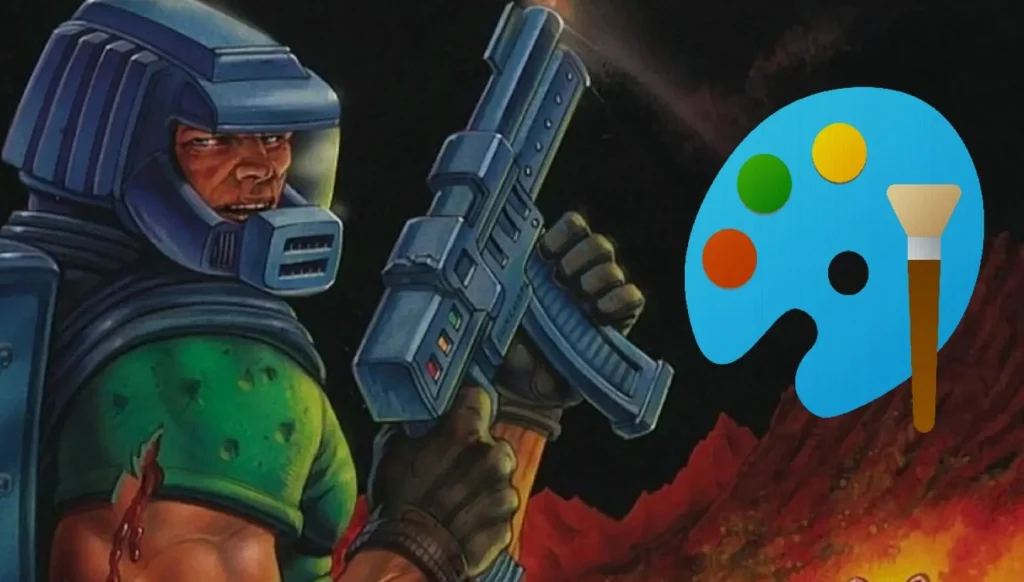
A long-running Doom experiment has taken another strange (but real) turn: a Microsoft Azure technical leader has demonstrated that the 1993 shooter can be made to run inside Microsoft Paint—not by recreating the game there, but by using Paint as a video canvas for Doom’s output.
Microsoft Paint as a Doom display, not a game engine
The key idea comes from a GitHub project called “DoomPaint,” which is specifically tailored to the original 1993 version. Rather than rebuilding Doom from scratch, the mod adapts the game’s rendering so that the visuals are produced directly on a blank Paint canvas, turning Paint into a kind of “screen” for the shooter.
In practice, DoomPaint runs the free shareware edition of Doom. It captures each frame and uses Windows clipboard behavior to transfer those frames, then pastes them onto the Paint canvas. The result is that Doom’s gameplay visuals appear within Paint itself, even though Paint isn’t acting like a traditional game runtime.
How it works: clipboard frames and a narrow target resolution
DoomPaint’s performance targets are modest but clear. The mod is compatible with a 35 Hz update rate and plays at 320×200 resolution—settings that align with Doom’s classic-era output rather than modern scaling.
- Runs the Doom shareware build
- Renders onto Paint’s blank canvas using clipboard frame transfer
- Targets about 35 Hz
- Uses a 320×200 resolution output
That approach also explains why the project is presented as more of a compatibility stunt than a full replatforming effort: it’s focused on what Paint can display, not on making Paint “understand” Doom logic.
Extra controls that Paint makes possible
DoomPaint includes a couple of behaviors that aren’t typical for the standard PC, console, or mobile releases. One notable feature is time-rewind via Ctrl + Z, allowing players to roll back after taking damage or dying.
It also supports saving at any moment by creating a PNG screenshot using Windows tools—effectively turning Paint’s built-in capabilities into a convenient “save” mechanism for capturing the current state.
Why this matters for Doom’s “run anywhere” reputation
Doom’s reputation for surviving on nearly any kind of hardware or software surface has been part of gaming culture for years. From far-out demonstrations to experiments in unexpected environments, the common thread is that Doom’s engine and asset formats have repeatedly proven easy to route through other systems.
In this case, Mark Russinovich—the CTO of Microsoft Azure—summarized the concept with a blunt philosophy: Paint renders but doesn’t process. The “trick,” as framed by Russinovich, is that Paint has no game logic of its own, and the charm is that the system can still display the game.
With DoomPaint, Microsoft Paint isn’t just showing a Doom-themed visual—it’s being used as the interface layer for the game’s frames, pushing the classic’s “immortality” narrative one step further into everyday Windows territory.