TSMC Reportedly Plans Another $100B US Chip Investment on Top of Prior Pledges
TSMC, the world’s largest contract chipmaker, is reportedly preparing to pour another $100 billion into the United States to expand domestic semiconductor production—on top of the $100 billion it pledged last year and the additional $65 billion it previously outlined.
Key takeaways
- TSMC is reportedly planning a further $100 billion investment in the US to expand chip manufacturing.
- The new pledge would come after two earlier US commitments: $100 billion last year and $65 billion already planned before that.
- During an earnings conference, CEO C. C. Wei said the spending is meant to support strong multi-year demand from major US customers.
- TSMC’s latest earnings reportedly showed a record profit jump, cited at $22 billion for the second quarter.
- The company’s shift toward the US is not guaranteed given China’s rapid memory expansion and the ongoing geopolitical risks tied to Taiwan and China.
Another massive US push for chip capacity
TSMC has reportedly announced plans to invest an additional $100 billion in the United States to expand production capacity. This comes after the company’s earlier US spending plans, including a $100 billion commitment made last year and a separate $65 billion figure that had already been discussed as part of its US expansion.
The prior $100 billion pledge was framed publicly by President Trump, who described it as a consequence of potential large taxes if TSMC didn’t build plants in the country—an approach discussed during a period when the US was also implementing tariffs.
It remains unclear whether the latest $100 billion is tied to similar political pressure, or whether it reflects a more purely market-driven decision.
Demand and earnings signal continued acceleration
At today’s earnings conference, TSMC’s CEO C. C. Wei said the additional investment is intended to “support the strong multiyear demand from our leading US customers.”
That statement aligns with broader industry conditions tied to the AI boom. The rapid expansion of AI workloads has driven major demand for memory and contributed to a global supply crunch, with industry researchers expecting demand to continue outpacing supply even into 2030.
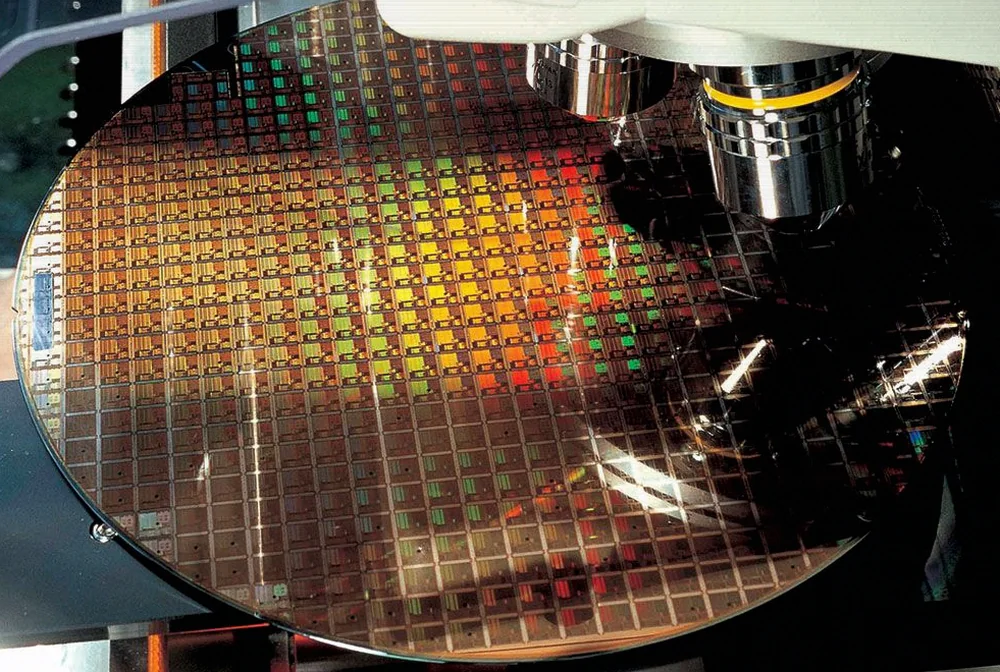
Because TSMC produces wafers used across both central processing units and AI accelerators used in servers, the company’s position in the supply chain has benefited from that sustained demand.
As a result, Reuters reports that TSMC’s second-quarter profit came in very high, with a forecast-beating record jump to $22 billion.
Why the US expansion still faces uncertainty
Even with strong demand, moving more production to the US has not been a foregone conclusion. The material notes that China is expanding its memory production quickly and may soon increase its ability to manufacture wafers to challenge Western output.
There is also the possibility that TSMC’s US-heavy plan is influenced by geopolitical considerations, including uncertainty involving China and Taiwan, where the company is headquartered.