German Researchers Urge EU to Preserve Online Games as Sony Shifts Away From Discs
A German academic group has launched an open letter warning that digital games are being pushed out of research and long-term cultural preservation. The appeal points to three recent developments: a European Commission response rejecting a citizens’ initiative aimed at keeping purchased online multiplayer games playable indefinitely, Sony’s move away from physical media, and the end of the International Computer Game Collection project after it failed to secure support.
Three triggers behind the preservation warning
The Arbeitskreis Geisteswissenschaften und Digitale Spiele (AKGWDS) says its letter is a response to several decisions from the past months that, in its view, threaten both games as a study subject and games as cultural heritage.
- EU follow-up to “Stop Killing Games” (June 16, 2026): The European Commission rejected the initiative’s core demand—keeping purchased online multiplayer games permanently playable.
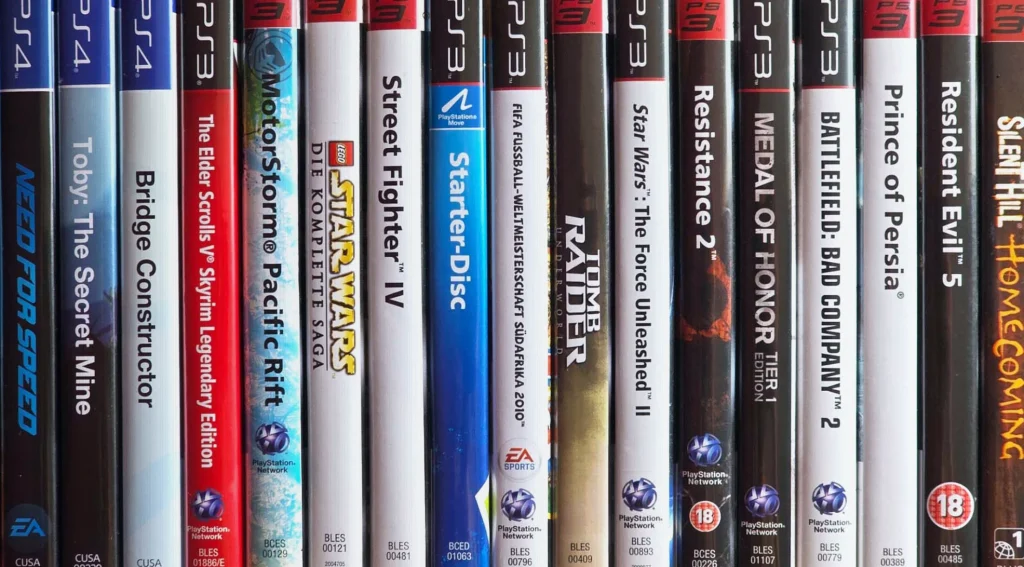
- Sony plans to end physical releases: Sony announced that from January 2028 it will no longer produce physical discs for new games.
- International Computer Game Collection (ICS) ends: The project’s phase concluded at the end of April 2026 with a negative result, and the collection will not continue under its planned approach.
Sony’s disc phase-out and store shutdowns
In the letter’s summary of Sony’s position, the company ties the disc exit to shifting consumer habits: physical discs are said to be increasingly outpaced by digital media. AKGWDS notes that games already released or scheduled to arrive before January 2028 are not affected by the change.
Separately, Sony also announced that the PlayStation Store for PlayStation 3 and PS Vita would be shut down in July 2027, with the stated goal of concentrating resources on platforms where most players are active.
Why AKGWDS says this harms preservation
- Physical archiving becomes harder: For titles where usage rights are tied to the media itself, the disappearance of discs limits future archiving options.
- Whole catalogues can vanish: With servers turned off, entire game libraries may disappear without libraries or game labs being able to secure them.
- Access shifts to corporate licensing: In AKGWDS’s view, future access would depend mainly on rights and account management controlled by the companies running the platforms and services.
ICS failure and the stated reason
On the ICS project page, the letter cites an explanation for why the effort could not move forward as a publicly accessible, permanent archive. The project states that the required public support was missing, and the project’s stakeholders decided unanimously not to continue the ICS under those conditions.
Legal obstacles and the preservation demands
Beyond platform and server issues, AKGWDS highlights copyright complications. It describes digital games as “hybrid works,” combining computer software with audio-visual media. The group argues that copying the code may be possible as a backup, but copying music or graphics outside private use can create legal barriers. For a complete preservation copy, both components would need to be captured together.
To keep games available for study and as cultural goods, the AKGWDS open letter calls for several measures:
- Independent digital infrastructure for scientific archiving, not controlled by platforms, publishers, or studios.
- A legally binding deposit requirement for digital game copies, comparable to the German model for mandatory deposit copies made to the Deutsche Nationalbibliothek.
- Open-server adaptations for server-based games, either by modifying the code to run on open server architectures or by releasing it to the community.
- Copyright changes that better support science and research.
What the group points to as a model
As an example, AKGWDS cites Austria, where mandatory deposit already applies to computer games with a pedagogical or knowledge-transfer orientation. The group contrasts this with German federal support for the games industry, which it says focuses on developing new titles rather than archiving existing ones.