Developer Runs DOOM on a 2010 Canon EOS 550D DSLR Using Magic Lantern
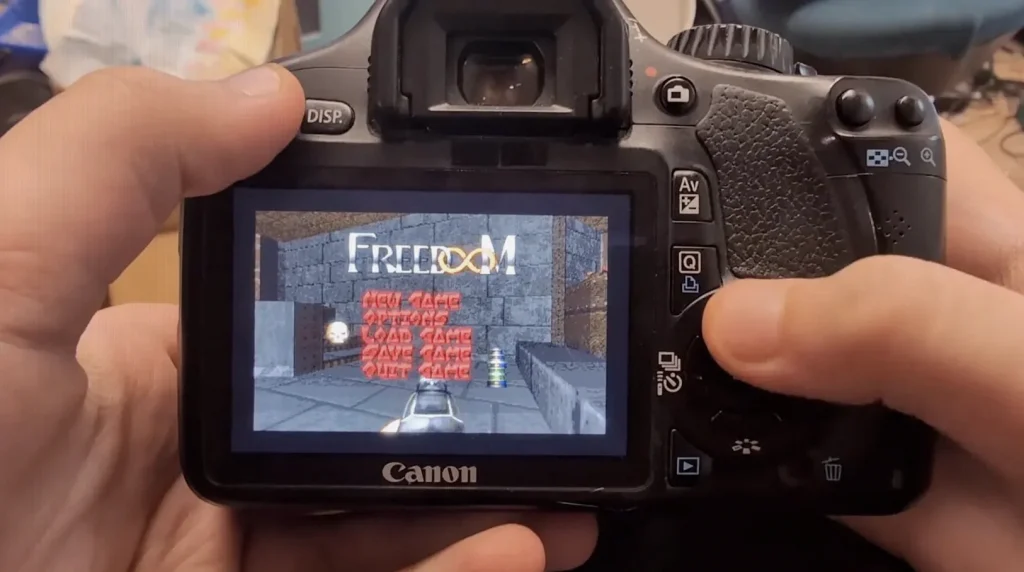
A developer has managed to run the classic shooter DOOM on a Canon DSLR from 2010, using the camera’s own controls and even its built-in speaker—turning a tiny 3-inch preview screen into a playable Doom experience.
DOOM running on a Canon EOS 550D (with Magic Lantern)
The project targets a specific camera model: the Canon EOS 550D, released in 2010. That DSLR includes a 3-inch screen, which might seem far too small for gaming—but the developer says the game is functional rather than just a video playback.
To make it work, the port relies on Magic Lantern, an alternative firmware used to add features to some Canon cameras. With the setup in place, DOOM reportedly runs for real on the device, and players can operate it directly through the DSLR’s buttons.
- Camera model: Canon EOS 550D
- Screen: 3-inch display
- Required firmware: Magic Lantern plus EOS 550D firmware version 1.0.9
- Controls: DSLR buttons for movement, firing, and menu navigation
- Audio: built-in speaker outputs game effects and gunshots
Code released, including save/load support
The work was created by a developer known as lauris-nl, who published the project’s code on GitHub so others can examine it and, in principle, try it on the same hardware setup.
Beyond launching the game, the port is described as supporting saving and loading game progress. The developer also frames it as a proof-of-concept more than a practical way to play—since the small screen and button layout weren’t designed for shooters.
Why this matters and what to watch next
This isn’t a “try any old Canon camera” situation. The port is intended for the EOS 550D and specifically calls out firmware version 1.0.9, meaning it likely won’t behave the same way on other camera models or configurations.
Still, it highlights how far experimentation can go with legacy hardware. If more users replicate or adapt similar approaches, older devices—and unexpected form factors—could keep getting surprising new “DOOM ports” and other interactive experiments.