Hidetaka Miyazaki Explains FromSoftware’s Multiplayer Design Philosophy
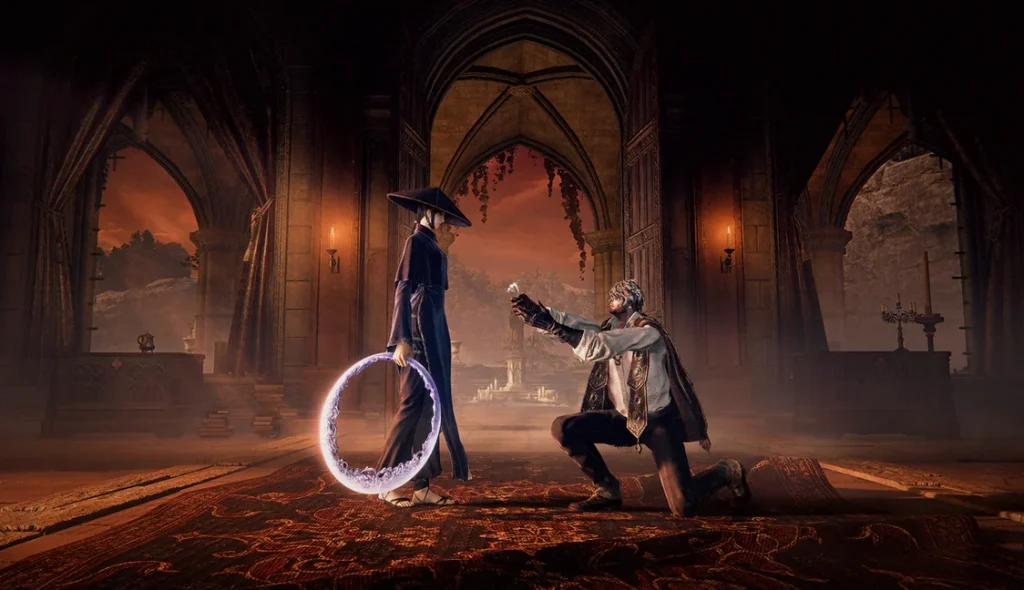
Hidetaka Miyazaki, president and director at FromSoftware, says his approach to multiplayer design has never been about chasing industry trends. Instead, he keeps pulling ideas from lived moments and everyday pastimes—ranging from an old car breakdown to his interest in tabletop role-playing—to shape how players connect, compete, and sometimes collaborate briefly. That philosophy is now being applied to The Duskbloods, a Switch 2 exclusivity he has helped shape.
From a roadside rescue to a “help-and-disappear” multiplayer idea
Miyazaki traces the roots of his multiplayer philosophy to the development of Demon’s Souls. He describes an incident in which his car became stuck on a snowy hillside, and multiple anonymous drivers stopped to help push the vehicle. After the car was moving again, they drove off without asking for anything—or even sharing who they were.
- During the creation period of Demon’s Souls, Miyazaki experienced a car breakdown on a snowy slope.
- Anonymous drivers spontaneously stopped to help push his car, then left right after the problem was resolved.
- That experience led to a design goal: create brief, anonymous interactions where players assist each other through hardship and then separate without knowing each other’s identity.
- He says this “ephemeral help” became a signature of FromSoftware’s multiplayer identity.
In The Duskbloods, he says that same spirit persists even inside a competitive structure. The game is described as centering on dark, chaotic fights, while still leaving room for short bursts of human connection between players.
Miyazaki’s explanation emphasizes the tension: players may end up fighting each other in some matches, but the game aims to generate moments of cooperation and fleeting communication during the middle of the chaos.
Tabletop role-playing influences the way players relate in-game
Beyond those real-world anecdotes, Miyazaki also points to a longer-running fascination with tabletop role-playing. He says this influence wasn’t necessarily planned from day one, but rather emerged as he continued developing games and realized he was drawing—sometimes unconsciously—on the social dynamics he experiences at a table with other players.
In The Duskbloods, he highlights the game’s sigils system as a key place where those tabletop dynamics show up. He describes revisiting how the system grew over time and how its elements reflect the way people interact in analog board game settings.
He specifically links the design to how tabletop RPGs handle alliances, roles, and character embodiment choices—then adapts those ideas into a structure meant to reinvent how players form relationships and approach each match.