Undercoders’ Denshattack Heads to Nintendo Switch 2 on July 15, 2026
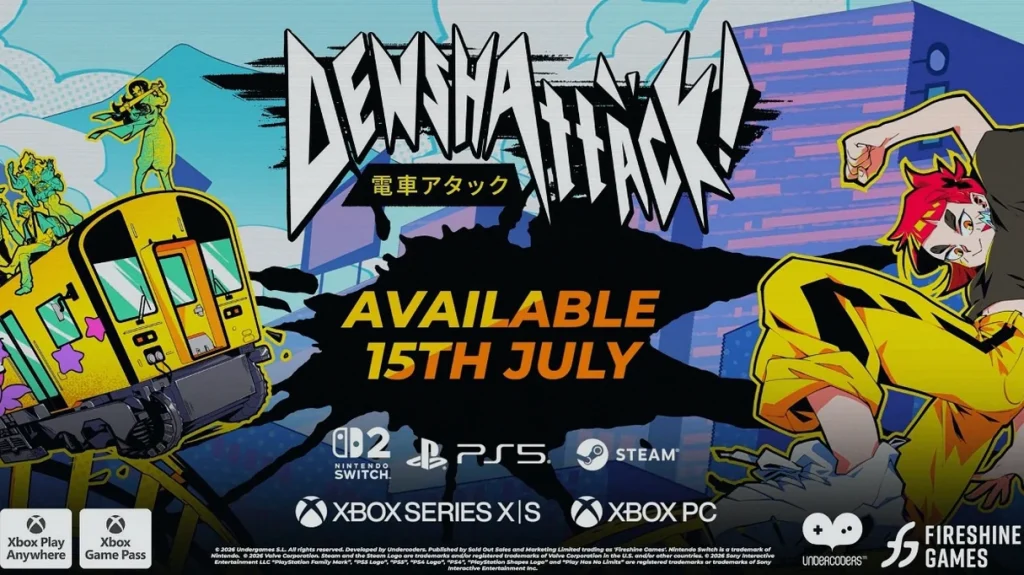
Denshattack, the on-rail tricking game revealed last summer, launches on Nintendo Switch 2 on July 15, 2026. Ahead of release, studio and game director David Jaumandreu at Undercoders shared how the concept formed, what was hardest to balance, and how player feedback and publisher setbacks shaped the final build.
From toy train to a full on-rail trick game
Jaumandreu said the core idea arrived “by chance” while he was tinkering with a toy train as if it were a fingerskate. The team then explored how that movement could become controllable gameplay—turning the “on-rail tricking” concept into a ruleset, challenges, and a feel that could be played.
Early on, the pitch was treated as a funny concept, but a prototype quickly convinced the team it was genuinely exciting to play. After iterating and expanding it into a complete game design, they committed to making Denshattack their next project.
Balancing speed, readability, and chapter variety
One of the biggest development hurdles was track visibility. The team wanted the world to look vibrant and faithful to real Japan’s landscapes and landmarks, but it also needed to stay readable at high speed so players could anticipate obstacles. Jaumandreu described repeated work across signaling, color palettes, per-level camera placement, non-intrusive visual effects, and “smart stage dressing,” all tested to find a workable balance.
To prevent pacing from feeling repetitive, the game is built around chapters designed to feel new and surprising. Each chapter has its own theme and story beat, plus replay-focused extras including secondary challenges, collectibles, scoring medals, and secret exits. New mechanics are introduced each chapter, and bosses are designed to deliver distinct experiences through the full run.
Controls, feedback loops, and a Switch 2 debut
Jaumandreu said many parts of the game went through heavy rework, to the point that he doesn’t think a single mechanic hasn’t been revised “a dozen times.” The control scheme is a clear example: it began as a more complex input system using more combinations and sequences, but focus-group playtesting led to a simpler, more user-friendly setup while preserving depth.
On the audience side, the team said community input shaped the project heavily. Before announcement, focus groups provided feedback on controls, visuals, design direction, and the concept itself. After launch announcements and public events, live play sessions and conversations at shows such as Gamescom, Tokyo Game Show, and BCN Game Fest helped the team identify what players liked—and what they “didn’t love so much”—so changes could be tested at the next event.
When it came to scoring, the studio adjusted systems after a public demo enabled “wild trickpark” gameplay to be shared. They also added the requested “overtime rule” to satisfy tricking enthusiasts.
For influences, Jaumandreu pointed to Jet Set Radio and the Tony Hawk Pro Skater series for visuals, tone, music, and how skate games are understood and played. He also cited classic Sega arcade games, colorful references from titles such as Splatoon or HiFi Rush, modern trick and rhythm games like Thumper and OlliOlli World, and the arcade train-riding series Densha de Go!
Regarding platforms, Jaumandreu said the team aimed for the Nintendo eShop from the start, but Switch 2 was only rumoured at first. After Switch 2 was officially announced, Undercoders worked with its publisher to gain Nintendo permission to develop for it. Development kits took time to arrive due to the 2025 console launch workload, which is why Switch 2 wasn’t part of the initial announcement.
What to watch next on launch day
- Release date: July 15, 2026
- Platform: Nintendo Switch 2
- Key design focus: track readability at speed, plus chapter-by-chapter pacing variety
- Player-driven changes mentioned: control simplification, scoring adjustments from public demo play, and the “overtime rule”
Jaumandreu also reflected on the project’s long road—pushing Denshattack for over a year despite repeated publisher rejections—and said the team learned how to present ideas, manage risk, recognize limitations, and keep believing in the proposal. He added that the future is about turning new concepts into games people genuinely want to play.