Rhythm Heaven Groove Review: Switch’s Biggest Return Hits July 2, 2026
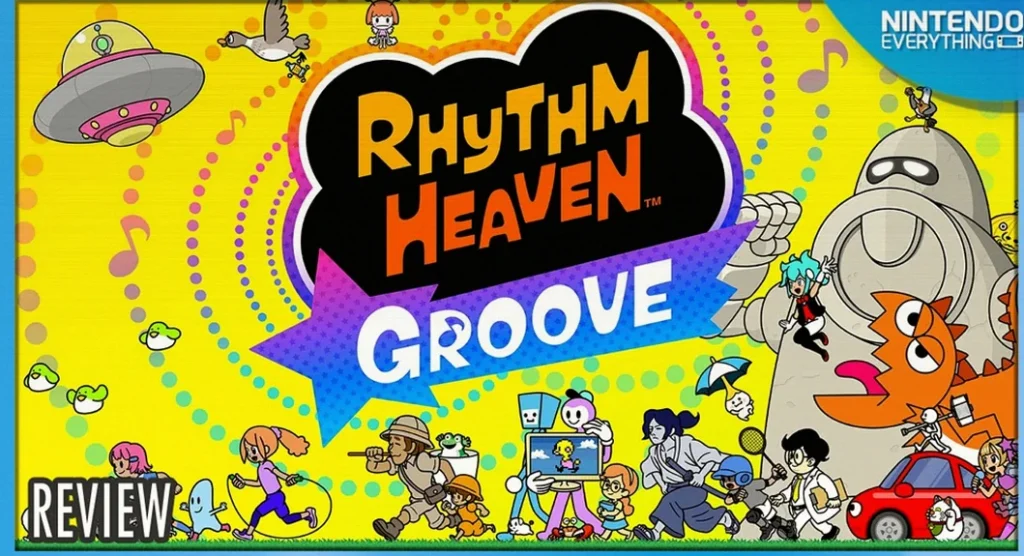
Nintendo has dated its long-awaited return to the Rhythm Heaven series with Rhythm Heaven Groove, launching on July 2, 2026 for Switch. The new entry is positioned as the broadest Rhythm Heaven package in years, bringing a large slate of fresh minigames plus multiplayer-only content—while also adding new ways to earn optional challenges.
A big minigame lineup built around “no-context” chaos
Rhythm Heaven Groove follows the franchise’s signature structure: short, music-driven minigames where the player has to learn timing through visual and audio cues rather than simply tracking falling notes. Nintendo says the game includes 80 single-player minigames, plus an additional 30 multiplayer minigames designed exclusively for shared play.
While the headline number is large, Nintendo’s breakdown implies a mix of entirely new entries, tougher variants, and remix stages. The single-player roster is described as including roughly 30 original minigames, about 30 difficult variants of those original concepts, and around 20 remix stages. Multiplayer is similarly framed as a smaller base expanded across difficulties: 10 minigames with 3 difficulty levels each.
Progression rewards mastery, with strict medal requirements
For most of the game, progression is straightforward: perform well in one minigame and the next one unlocks. However, Groove ties much of its side content to a high-precision requirement. Many additional rewards are locked behind medals that require an “Amazing” ranking—meaning the game expects very few mistakes, and some minigames may require multiple attempts to reach the standard.
The game also introduces an extra layer for perfectionists. After completing a minigame, players can sometimes “go for a Perfect.” That window is limited to three attempts before it disappears temporarily. Reaching Perfect ratings repeatedly can unlock Night Mode, a challenge that removes visuals and forces players to rely on audio timing alone.
Control changes: some sections ask for three buttons across Joy-Con
Groove keeps many interactions simple and accessible, but the difficulty baseline can ramp in ways that may surprise new players. Some minigames require managing three buttons distributed across both Joy-Con controllers. As patterns accelerate and cues intensify, that setup can make the timing demands feel more technical than earlier Rhythm Heaven entries.
Beatspell adds an RPG-like rhythm combat mode
Beyond the core minigames, Rhythm Heaven Groove’s standout side mode is Beatspell. In this mode, the player takes on the role of a mage trying to escape a cave labyrinth by casting spells in rhythm to damage monsters. The system begins with a basic fire spell that involves timed inputs for charging and blasting, and additional spells are unlocked as the player progresses.
Some actions require more exact timing—for example, healing involves hitting three buttons precisely, including inputs timed to the half beat. The mode’s character presentation includes a playable girl named Yu, who performs in sync with the spellcasting inputs.
Beatspell is structured as eight stages unlocked over time, each acting like a run through progressively tougher encounters with a boss at the end. The player can choose which spells to unlock and upgrade, introducing a small amount of strategy alongside the rhythm execution. A light story is conveyed through in-menu notes rather than cutscenes.
Completing Beatspell unlocks a longer, harder version described as an ultra-streamlined roguelite experience, set apart from the rest of the game’s optional content.
Local multiplayer is a major focus
Groove’s local multiplayer appears to be one of its strongest selling points, featuring minigames built for quick laughs and repeat play. Multiplayer-exclusive entries highlighted include Cake Wait, where players compete to hit the A button at the precise time to grab a slice of cake while others are knocked off their feet, and Tennis Quest, which is more cooperative: players swing tennis rackets to the beat to take down waves of absurd enemies.
While most multiplayer minigames are described as immediately fun on the first run, one matching-style minigame is noted as feeling out of place and less engaging than the rest.
Handheld mode may feel more consistent than TV play
Like many rhythm games, Groove’s input timing experience can vary depending on display latency. The game includes an on-menu calibration tool, but testing described in the material suggests it didn’t meaningfully fix delays in TV mode, and manual configuration sliders are not available. By contrast, handheld play is presented as the most reliable way to avoid latency issues, with easier headphone use and a pacing feel suited to the smaller screen.
Release details
Rhythm Heaven Groove launches July 2, 2026 on Nintendo Switch.