Como Thrash Manchester United 4-1 in Historic Champions League Night
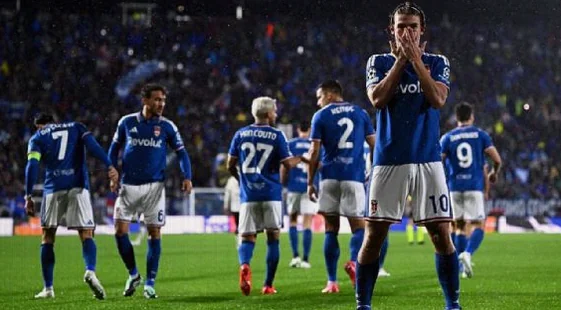
Como marked the biggest night in their history by crushing Manchester United 4-1 in the Champions League, with Nico Paz starring as Cesc Fàbregas’ side turned a storm-hit evening on Lake Como into another statement of intent.
Wind and heavy rain swept across the 12,000-seat Stadio Giuseppe Sinigaglia on Wednesday, but the home support — a mix of long-standing locals and travelling visitors — left celebrating a famous European win. United supporters had filled Como’s streets earlier in the day, while blue-shirted fans streamed towards the ground from the lakefront.
Como’s rapid rise
- Como were declared bankrupt twice after 2003 and were still competing in Italy’s amateur fourth division in 2018-19.
- Indonesia’s Djarum Group completed its takeover in 2019, initially planning to develop Indonesian national-team prospects at the club and broadcast matches back home.
- An immediate promotion into the professional third tier ended that model because foreign players could no longer be used in the intended way. The project was instead adapted into a documentary series.
- Promotion to Serie B brought far higher costs, forcing the ownership to decide whether to sell or build a commercially sustainable operation around the club.
- Como won three promotions across six years and returned to Serie A in 2024, ending a 21-year absence from the top flight.
- Under Fàbregas, appointed head coach in November 2023 after joining first as a player and then working with the under-19 and B teams, Como finished fourth last season.
- That finish secured the first Champions League place in the club’s 119-year existence. Como then opened their league-phase campaign with another 4-1 victory, against RB Leipzig, before beating United by the same scoreline.
For supporters who followed Como through the lower divisions, the transformation has been difficult to process. Elena Roda, a fan for more than four decades, said Champions League football still feels “like a dream” after years in which such progress appeared impossible.
Lake Como becomes part of the business plan
Como’s ownership concluded the club could not rely on football alone. The city has a population of about 83,000, while Lake Como’s tourism economy is estimated to generate roughly €1.5 billion a year. The club’s answer has been to sell the matchday experience alongside one of Italy’s most famous holiday locations.
Tourism in the wider region rose from around 1.9 million visitors in 2019 to 5.6 million last year. The area’s global appeal has been boosted by high-profile visitors and property owners, including George Clooney, Robert Pattinson and Sylvester Stallone, as well as George Lucas, Logan Paul, Barack Obama and Michael Jordan.
Como have embraced the influx rather than viewing it as a threat to their traditional support. An Isle of Wight supporters’ group began after fans visiting Milan found neither AC Milan nor Inter were at home and travelled the 25 miles to Como instead. The Como Tartan Army in Scotland has grown to 3,000 members.
The club has also drawn celebrity matchgoers including Hugh Grant, Andrew Garfield, Kate Beckinsale, Keira Knightley, Michael Fassbender, Adrien Brody, Benedict Cumberbatch and Terry Crews.
- Como operate The Club On The Lake, a private members’ venue in an 18th-century villa close to the stadium.
- The site includes a roof terrace, library, music room, games room and a Michelin-starred restaurant.
- Annual membership is priced at about €4,500.
- The club created the Como Cup to stage summer fixtures during the busiest tourist months; Crystal Palace, Lens and Villarreal featured last summer.
The strategy brings a clear football demand: visitors will only return if the team is worth watching. President Mirwan Suwarso has made clear that Como want their football to reflect the beauty and calm associated with the lake, rather than offer a poor spectacle to tourists.
Fàbregas given control on the pitch
Fàbregas has become the central figure in that approach. The former Barcelona midfielder described Como’s starting point as “minus-10,” but set out a plan based on recruiting young, overlooked players and giving them a defined style.
He was handed responsibility for the football department while Suwarso focused on the club’s off-field development. The owners were convinced by the attacking identity Fàbregas established with the youth side, including a performance against Inter’s academy despite Como having only recently rebuilt their own youth structure.
Rather than follow Italy’s traditionally cautious, defensive template, Como have pursued a possession-based and progressive model shaped by Fàbregas’ Barcelona education. The result has lifted his coaching reputation as rapidly as it has raised the club’s profile.
What happens next
Como are using their Champions League run to expand their international support while protecting the connection with fans who endured the difficult years. Before the Leipzig match, directors surrendered tickets so some of the club’s oldest followers could attend. For United’s visit, loyal supporters from the lower-league era carried the Champions League banner onto the pitch before kick-off.
Fàbregas believes the alignment between supporters, staff, directors and the city is essential. Como’s next task is to maintain that unity as European football brings even greater attention to a club that has turned a lakeside location into a route from the fourth tier to the Champions League.