
FIFA Yet to Confirm 64-Team World Cup Plan for 2030
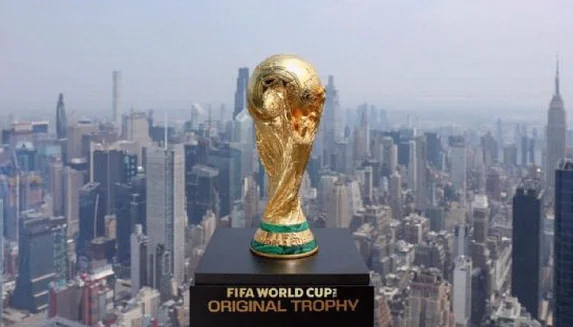
FIFA has not confirmed a 64-team World Cup for 2030, despite CONMEBOL’s president declaring this summer that the centenary tournament will feature 64 nations. The proposal would take the competition beyond the expanded 48-team 2026 edition and place a huge scheduling and infrastructure burden on co-hosts Morocco, Portugal and Spain.
FIFA president Gianni Infantino has kept the door open to further growth, arguing in 2026 that the World Cup should serve the entire global game rather than only Europe and South America. CONMEBOL first raised the 64-team possibility in March 2025.
Quick facts
- A 64-nation World Cup would mean 16 groups of four and 128 matches.
- The group phase alone would rise from 72 matches in 2026 to 96 in 2030.
- At the 2026 rate of 4.2 group games per day, the opening phase would last almost 23 days.
- The full tournament could stretch to 45 days, or more than six weeks.
- Morocco, Portugal and Spain may require about 19 stadiums, before accounting for planned centenary matches in Argentina, Paraguay and Uruguay.
A 64-team format would offer FIFA a cleaner group-stage model than the one used in 2026. Sixteen groups of four would send the top two sides directly into a 32-team knockout bracket, removing the need to rank and advance selected third-placed finishers.
The problem is time. The 2026 group stage contained 72 matches across 17 days; adding 24 more fixtures at the same daily rhythm would add nearly six days. The knockout rounds could retain their existing structure, but the entire event would then run for around 45 days.
Keeping the group phase inside a 17-day window would require roughly 5.6 games per day. With turnaround time between kick-offs, six-match days could force fixtures into awkward hours. Simultaneous matches might ease the pressure early in the group stage, but would reduce standalone broadcast windows and limit fans’ ability to watch every game.
LaLiga president Javier Tebas warned in July that adding national teams was not sensible, saying football cannot be built entirely around the World Cup and arguing that the wider industry is being damaged by expansion.
Qualification places could rise again
If FIFA broadly applied the 2026 confederation shares to a 64-team field, while reserving four places for a final playoff route, UEFA could receive 20 entries rather than 16. Africa could rise from 10 to 12, Asia from nine to 11, CONMEBOL from six to seven, Concacaf from six to eight, and Oceania from one to two.
South America’s smaller increase reflects the fact that CONMEBOL has only 10 member nations. Seven qualification places would still leave comparatively little resistance within the region.
More automatic routes would also reduce the jeopardy of qualifying. UEFA president Aleksander Čeferin said in April 2025 that a larger finals field would be bad for European qualifiers.
The financial effect could be just as significant. If qualifiers lose sporting tension and commercial appeal, broadcasters and sponsors may place even greater value on FIFA’s finals, increasing national associations’ reliance on the World Cup.
Concacaf could face a particularly sharp structural change. An eight-team final qualifying group would make little sense if the confederation itself has eight finals places available, potentially pushing the region towards separate groups. That could reduce the chance of marquee qualification meetings involving Mexico, the United States and Canada.
Player workload remains a major objection
Player unions and domestic leagues have repeatedly objected to the expanding calendar. FIFPRO said in 2024 that FIFA had failed to properly involve leagues and player unions in key decisions, and accused the governing body of prioritising its own events and commercial interests over players’ welfare.
Premier League chief executive Richard Masters had already described the calendar as approaching a breaking point. He said feedback from players was clear: too much football was being played and the schedule was continually growing.
Concacaf president Victor Montagliani also opposed the idea in April 2025, saying a 64-team men’s World Cup would not benefit the tournament or the wider football system of clubs, leagues, national teams and players.
The debate is not solely about fatigue. Critics question whether another expansion would weaken the standard of the finals, although the 2026 tournament produced knockout-stage runs for Cape Verde, ranked 69th by FIFA, and No. 74 Ghana.
AFC president Sheikh Salman bin Ibrahim Al Khalifa warned last year that once expansion remains open for discussion, demands could go far beyond 64 teams. He said the process could eventually descend into chaos.
Hosts would need a far larger footprint
The 2026 World Cup used 16 venues for 104 matches, an average of 6.5 games per stadium. AT&T Stadium in Dallas staged a tournament-high nine fixtures.
Applying that same ratio to a 128-match competition points to a need for around 19 venues in 2030. The calculation is complicated by plans to give Argentina, Paraguay and Uruguay one centenary match each, while no final host-city or stadium list has been settled.
Twenty-three stadiums have been proposed across the six countries involved in the 2030 project. That would be a dramatic change from the 1994 World Cup, which was played in only nine venues.
With teams potentially crossing the Atlantic during the group phase, a bigger role for the South American centenary hosts could become logical. Rather than staging one match each, Argentina, Paraguay and Uruguay could need to host an entire group.
The wider question is whether future hosts can cope. Saudi Arabia’s 2034 plans would face a major test if FIFA moves to 64 teams without a co-host, while accommodation, training bases, transport and stadium capacity would all become more demanding.
For comparison, the 16 venues used in 2026 ranged from 45,000 to 80,000 seats, with the largely NFL-based United States stadium network helping FIFA generate billions. A 64-team World Cup could narrow the list of countries able to host alone — and raise fresh questions over whether the United States could return in 2038.