Florida Banker’s Coca-Cola Plan Turned Quincy Families Into Millionaires
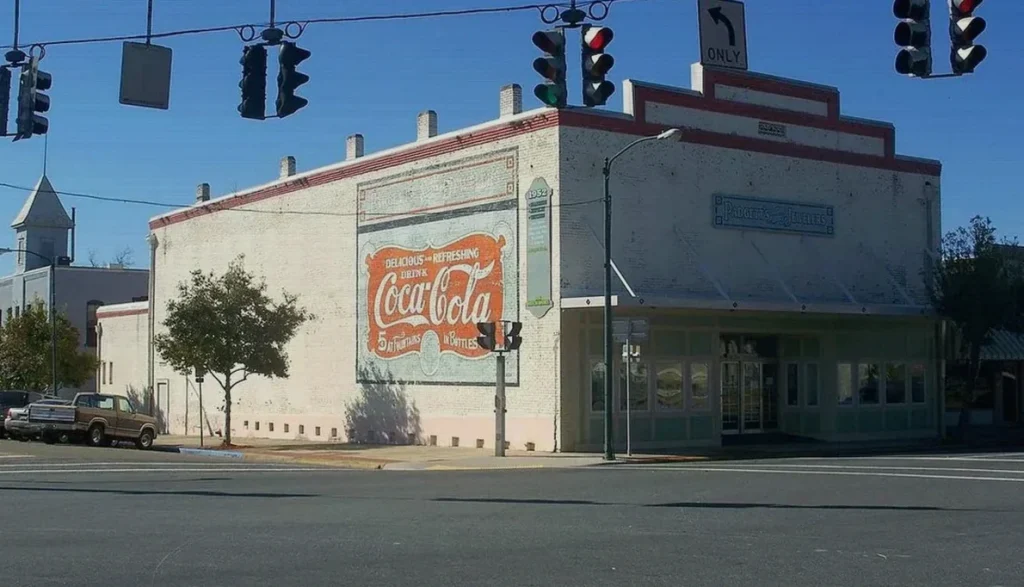
In the middle of the Great Depression, one Florida banker turned everyday community habits into a long-running wealth strategy built around a single stock: Coca-Cola. The result was a farming town in Quincy that briefly ranked among the richest places in the United States by population—and whose fortunes have continued to be passed down for generations.
Background: Quincy in the Great Depression
The story centers on Quincy, Florida, during the 1920s and 1930s when local families faced severe financial hardship. Pat Munroe, a banker and businessman, noticed a recurring pattern in daily life: regardless of how difficult things were, residents still spent spare money on a cold Coca-Cola.
Munroe connected that loyalty to a market opportunity. Coca-Cola had begun trading on the stock exchange in 1919 at $40 per share, but later suffered a major drop—down about 50%—after a conflict involving the sugar industry and bottlers. At one point during the downturn, the shares were reportedly available for as little as $19.
What happened: Munroe’s Coca-Cola investment push
- Munroe identified what he saw as strong consumer attachment to the Coca-Cola brand, even while Quincy residents struggled financially.
- He encouraged aggressive buying of undervalued Coca-Cola shares throughout the community, not just among wealthy residents.
- Rather than acting alone, Munroe persuaded friends, neighbors, and others in town to purchase shares in the company.
- When customers came to his bank seeking loans, he encouraged them to take additional loans in exchange for buying Coca-Cola stock.
- A broad cross-section of the town—farmers, merchants, teachers, and anyone who could spend—ended up acquiring shares, and Quincy grew into a community of Coca-Cola shareholders within a few months.
- Munroe also pressed for one strict rule: keep the shares for as long as possible, even when short-term market swings made selling tempting.
Reaction and outcomes: “secret Coca millionaires”
The approach was portrayed as highly successful for the town. Quincy’s residents were able to withstand economic hardship, with Coca-Cola’s dividends playing a central role. At one point, Quincy became the richest U.S. city by income per person.
Locals even earned a nickname for the phenomenon—“secret Coca millionaires.” The wealth generated by early shares was described as being handed down across generations, creating financial dynasties tied to long-term holding.
How much could one share be worth?
Estimating the total sum for the whole town is described as difficult, but a widely cited study from 2013 (noted as likely outdated) put forward a dramatic benchmark. It suggested that a single Coca-Cola share—with dividends reinvested over a century—can be equivalent to about $10,000,000.
- The study’s figure includes roughly $270,000 in cash dividends before taxes going to the owner.
- It also referenced dividend payments via checks of $67,500 in March, June, September, and November each year.
- It further claimed that if great-grandparents had bought 100 shares for between $1,900 and $4,000 depending on the purchase price, the value today would be over $1 billion, excluding the effect of inheritance taxes on wealth.
Where the story is still visible today
Today, the bank that began the campaign is said to display a Coca-Cola bottle. As of recently, it was reported that 65% of the trust assets managed by that bank were still invested in Coca-Cola shares.
Despite the wealth history, Quincy is described as having changed little since the Great Depression: it remains a quiet, mostly agricultural town with a population under 10,000—where, without knowing the background, it would be hard to spot that “secret Coca” millionaires still walk the streets.