Germany Plans ID Card Redesign to Store Address in the Chip
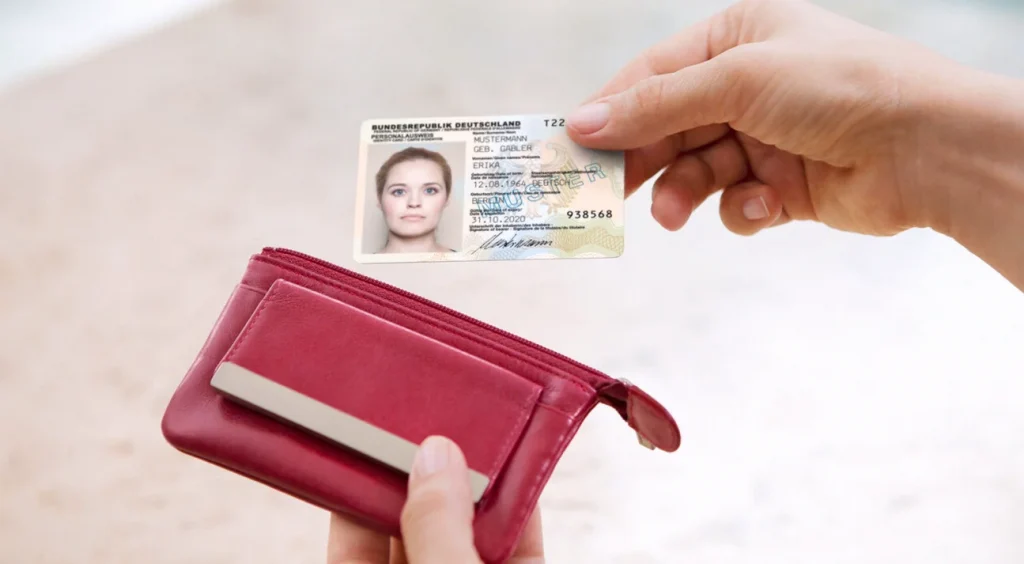
The German Federal Ministry of the Interior and Community (BMI) is planning a redesign of the national ID card (Personalausweis) aimed at moving the holder’s address fully into the card chip. Under the proposal, the address printed on the back would disappear, while the front photo would be enlarged—and the sticker citizens currently need to request after moving could be eliminated.
Key takeaways
- The BMI wants the ID card’s address to be stored digitally in the chip rather than printed on the back.
- The proposal would enlarge the front-facing image on the card.
- If implemented, the address-change sticker required after moving would no longer be necessary.
- Germany’s government is also considering making new ID card applications digital, with only biometric fingerprint submission handled in-person.
- Several additional changes are under discussion, including stronger cryptographic protection, added security features, and a Data Matrix code.
- A Bundestag petitions committee recommended the address-in-chip approach in May, but cited potential security concerns.
Address goes into the chip; sticker after relocation could end
Plans reported as under consideration would replace the current practice of having the address printed on the back of the Personalausweis. Instead, the BMI is considering storing the “address data field” directly in the chip that is already present in all ID cards—alongside the eID functionality.
The ministry’s approach is also framed as a simplification of bureaucracy. According to a BMI spokesperson, the goal is to examine not only the move to chip-based address storage, but also how procedures and related administrative steps could be adjusted to reduce paperwork and improve digitization. The proposal argues that for pure proof of address, other methods could be used that are “as barrier-free as possible.”
In practice, the address would still be needed for verification, but it already appears to be available through the chip today. The intended change is described as standardizing how address data is read, not inventing a brand-new data source. Existing tools such as the AusweisApp are already designed to read chip contents, which is why the BMI’s concept would further digitize both address registration and proof of address.
One visible consequence would be the likely removal of the sticker citizens must collect from the registration office after moving. Even where re-registration can already be handled digitally in many municipalities, the small sticker has still been required in the physical card process. If the chip-based address is treated as the official source, the sticker requirement could be dropped.
Digital re-application: fingerprints in person, photos already digital
A broader digitization effort is also being discussed for issuing new ID cards. It became known that the federal government wants to allow the application process to be digital as well.
As decided by the cabinet on 15 July, the plan includes creating a central register for passports and ID documents. Under that model, citizens would generally appear at the office only to submit the mandatory fingerprints. By contrast, ID card photos have already been required to be transmitted digitally since May 2025.
Other card changes being evaluated; timeline still unclear
Beyond the address-in-chip redesign, the ministry is reviewing additional modifications. These include improving cryptographic safeguards, adding further security features, and considering the use of a Data Matrix code. Another item under consideration is whether to enlarge the biometric front-facing photo, though no final decision has been reported.
Development is still at the concept stage. No timetable for the technical rollout has been published, and the planning phase is said to be expected to last until at least the end of 2027.
Parliamentary support for the chip address—alongside security objections
The BMI’s direction is receiving backing from within the Bundestag. On 6 May, the petitions committee recommended the approach of storing the address digitally after reviewing a petition submitted by a citizen. The recommendation passed with broad support and was forwarded to the BMI.
At the same time, the petition and the committee’s reasoning point to security risks. The argument presented is that thieves who steal a wallet—potentially together with keys—could obtain the victim’s address. The discussion also notes that printed address text is not universal: France, Spain, and Italy reportedly do not use the same practice.