Gigabyte RTX 3070 Owner Finds VRM Film Left On After Years of Heat Issues
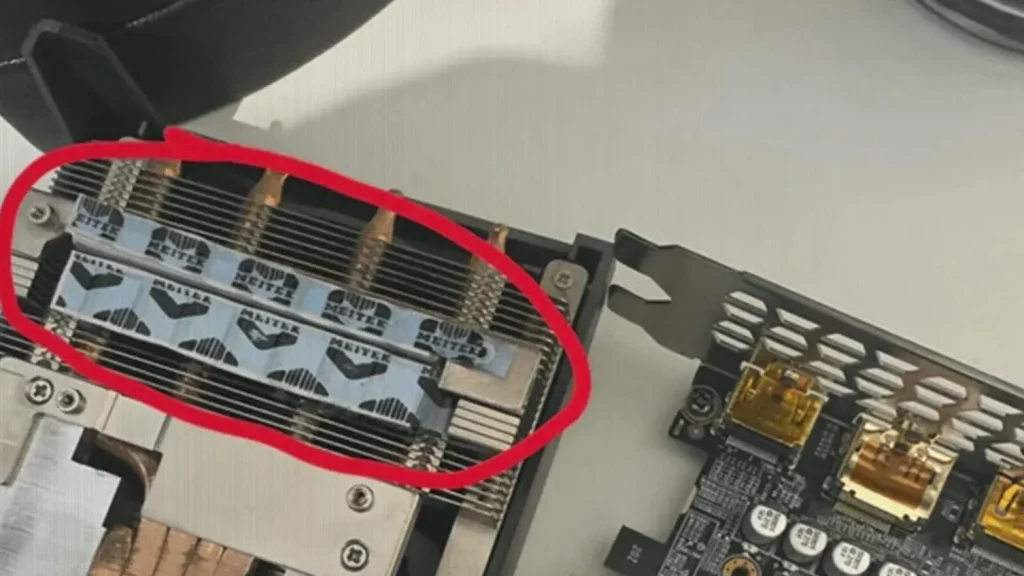
A Reddit user says they found a manufacturing mistake inside a GIGABYTE GeForce RTX 3070 Gaming OC (rev 2.0) after nearly five years of use: the VRM thermal pads were still protected by a blue protective film that should have been removed during assembly. The oversight likely kept heat from being transferred properly, and the card only stabilized after the film was removed and thermal paste was replaced.
Quick facts
- User reported black screens, unusual fan behavior, and sudden RPM spikes up to about 3,500
- Attempts to fix it with MSI Afterburner’s custom fan curve didn’t resolve the instability
- After the first teardown in roughly five years, the VRM thermal pads still had a blue protective film installed
- Removing the film and replacing GPU thermal paste improved temperatures and overall stability
- The user later contacted GIGABYTE, but the company declined responsibility due to the card being out of warranty
The user, identified as buczi94, began running into unpredictable failures. Symptoms included black screens, odd fan behavior, and rapid RPM surges reaching roughly 3,500 even when a custom cooling curve was set through MSI Afterburner.
After trying multiple configurations without success, they decided to open the graphics card for the first time since purchase. Inside, they discovered that the VRM thermal pads still had the blue protective film on them—film that is normally removed before installation so thermal contact is correct.
That means the GPU appears to have operated for about five years with reduced heat dissipation from the VRM area. As a result, heat would have accumulated more than it should, potentially stressing sensitive components over time. The user’s stress testing after the fix indicated the behavior was not a random defect, but instead tied to the assembly error.
Once the protective film was removed and the thermal paste on the GPU was replaced, the user observed a significant improvement in temperatures and system stability. They also noted that while the card ran better afterward, the long period of suboptimal thermal conditions likely shortened its effective lifespan.
Why the issue stayed hidden
The post highlights a quality-control problem: manufacturers don’t inspect every single unit in detail, instead relying on random sample checks to confirm the production line is working correctly. For buyers, there’s no practical way to verify the thermal pad setup without opening the card, so the only real path to detection is a teardown.
That raises a broader concern about how many similar cards could have ended up with degraded performance or even premature failure before anyone ever inspected the VRM pad assembly.
GIGABYTE declined warranty help
After the discovery, the user contacted GIGABYTE seeking a remedy. The company reportedly rejected any responsibility, citing that the RTX 3070 was outside the warranty period, even though the fault appeared to originate from the manufacturing process.
The user says they received generic support rather than a response addressing the underlying cause, leaving them with a bitter outcome despite being able to improve performance by correcting the thermal pad film issue themselves.