How Intel’s 8086 Was Built for Reliability—and Came to Define the PC Era
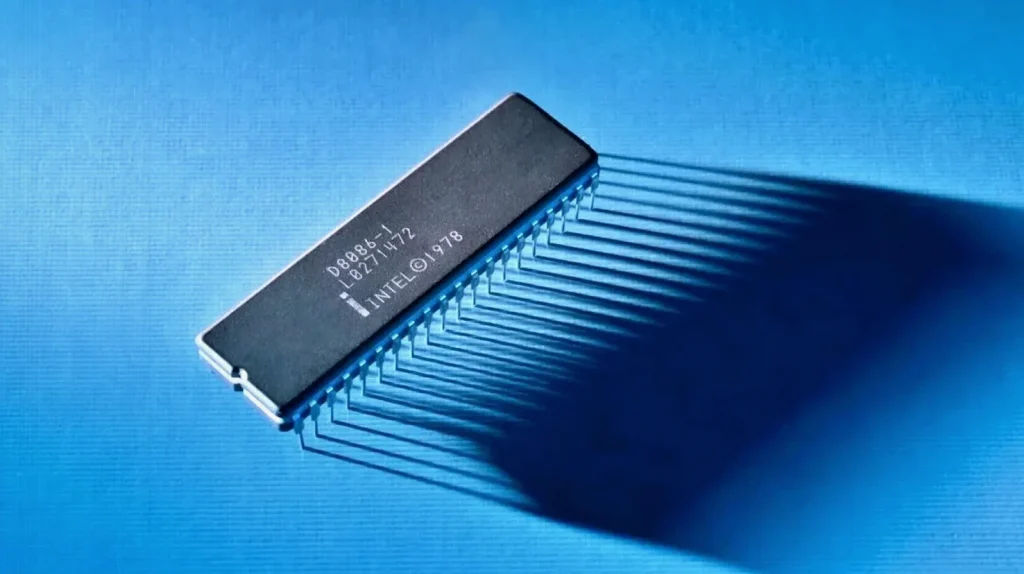
In the late 1970s, Intel faced a pressure that would shape the PC era: it needed a new processor to compete with rivals. The goal wasn’t to leap ahead with cutting-edge technology, but to deliver something that worked reliably for the majority of users and could be produced without turning every system design into an expensive, complex project.
That push led to the creation of the Intel 8086. While the chip’s launch was aimed at a practical, straightforward role, it ended up succeeding far beyond expectations. In a way Intel did not plan for, the 8086 became the foundation for the majority of personal computers that followed, setting patterns that other companies would later copy and build upon.
A pragmatic design that became a platform
The 8086 was not developed with the intent to radically reinvent the market or to be the most advanced processor of its time. Instead, it was built to be simple and relatively easy to manufacture, reducing both cost and design risk for manufacturers trying to make computers more accessible. Even if it wasn’t the performance leader, it offered a combination that mattered to the market: it worked well, was stable, and didn’t carry a price tag that scared off buyers.
That mix helped shift attention toward the 8086 as a dependable building block. The same lesson still resonates today: many people gravitate toward hardware that simply works at a reasonable cost, rather than chasing the most expensive option available.
The real breakthrough came when IBM was preparing a new personal computer and selected a chip derived from the 8086: the Intel 8088. That decision became pivotal because the IBM PC quickly turned into the reference model that other manufacturers started copying—both for office use and at home. Without intending to, IBM effectively set the direction for the industry, and Intel’s platform design spread much farther than anyone initially assumed.
Once that compatibility ecosystem formed, the entire software and hardware landscape began to revolve around it. Programs and systems were increasingly designed with the expectation that they would run on this processor family, reinforcing demand and making “fit in the same system” a requirement for alternatives to succeed. This compatibility chain helped consolidate Intel’s position, leaving competing approaches with a harder path to gain traction.
Over time, the influence of the 8086 lineage grew until it became a core base of modern computing. While processors have changed dramatically since then, the underlying design philosophy and the importance of system continuity have remained. What started as a quick, practical solution ended up driving a long-lasting impact on the technology people use every day.
Today, the legacy of the 8086 still shows up beyond desktop computers, including in servers and other systems that rely on that broader technological foundation. Even as the industry moved toward faster and more efficient designs, maintaining compatibility with that original approach has been key for keeping the ecosystem coherent. It’s a clear example of how a decision made from necessity can end up shaping an entire industry for decades.
Without the Intel 8086, the company’s later trajectory—and the PC world built around it—likely would have been very different. That’s why the significance of those four digits reaches far beyond a single processor generation.