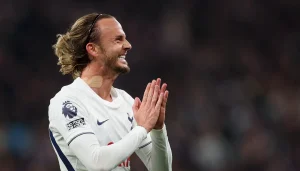
Lisandro Martínez Apologises After Criticising Man Utd Transfer Ambition
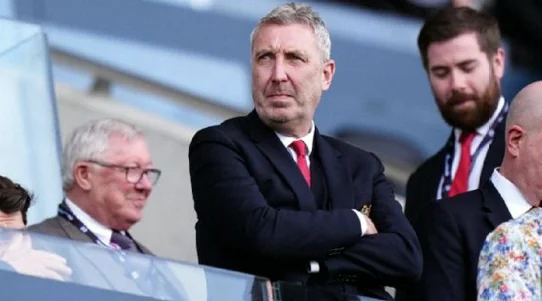
Lisandro Martínez has apologised after publicly questioning Manchester United’s transfer ambition and directing criticism towards the club’s football leadership in the wake of last week’s 2-0 defeat at Atlético Madrid.
Martínez puts recruitment department under pressure
The Argentina centre-back, who joined United in 2022, delivered an unusually direct post-match assessment after the loss in Madrid. Rather than targeting manager Michael Carrick, Martínez demanded answers from those responsible for shaping the squad.
- Martínez said United had not shown enough “ambition” in the market.
- He said he expected more from the club’s technical leadership.
- He questioned the repeated changes in the dugout while other departments escaped similar scrutiny.
- His comments were widely understood as criticism of Jason Wilcox, United’s director of football.
Wilcox was promoted last year and no longer carries the technical director title, but his remit includes recruitment and long-term squad planning. Martínez’s intervention placed responsibility for United’s problems beyond the coaching staff, an uncommon public challenge from an active player.
Players regularly accept blame for poor performances, and managers are often the implied targets when teams fail. But Martínez went further by identifying the club structure above the first team as an area requiring accountability.
Why football executives stay out of sight
Every Premier League club now has a senior sporting executive, although their power differs from club to club. Yet it remains the head coach who normally handles questions on transfers, strategy, results and the wider direction of the team.
That public arrangement has survived even as the traditional all-powerful manager has disappeared. During the 1990s, figures such as Sir Alex Ferguson at United and Arsène Wenger at Arsenal oversaw much more than coaching. Recruitment, sporting policy and the public message were commonly controlled by one person.
The modern structure has divided those jobs, but not the media burden. Several factors have helped maintain that imbalance:
- English football has long treated the manager as the club’s central public figure.
- Some overseas executives have preferred an established coach to lead communication, particularly when adapting to English media culture.
- Staying out of regular press conferences reduces direct external pressure on those making recruitment decisions.
- Owners have generally seen little need to alter a system that works smoothly when results are positive.
The role itself developed in Europe long before it became routine in England. Italian executive Italo Allodi began at Mantova in the mid-1950s before helping assemble Helenio Herrera’s celebrated Inter side from 1959.
English clubs also tested versions of the model before the Premier League era. Matt Busby became Manchester United general manager in 1969, leaving Wilf McGuinness in charge of the team. Manchester City followed two years later, with Joe Mercer moving upstairs and Malcolm Allison taking the manager’s role. Both arrangements were short-lived, partly because authority was unclear.
From former managers to specialist recruitment leaders
The director of football title returned to English football during the 1990s, often with experienced former managers placed between the board and the coach.
- Lawrie McMenemy took a senior Southampton post in 1994.
- Kenny Dalglish became Blackburn director of football in 1995.
- Ron Atkinson moved into a similar Coventry City role in 1996.
- David Pleat was appointed by Tottenham in 1998.
Dalglish worked above Ray Harford at Blackburn, while Atkinson occupied a senior role over Gordon Strachan at Coventry. Those experiments did not settle the central questions: who controlled signings, who held final authority and where the manager’s power began and ended.
Former managers were often difficult fits for the position. Accustomed to making final decisions, some struggled to become advisers rather than the dominant football voice. The result could be tension rather than support for the coach below them.
By the 2000s, clubs increasingly recruited specialist sporting directors from scouting, data, sports science, finance and playing backgrounds instead. Foreign investment accelerated the shift, as new owners were less willing to hand recruitment policy entirely to a manager already responsible for training and match results.
Foreign coaches were also more accustomed to working within that hierarchy. Chelsea and Tottenham were early users of the modern approach: Frank Arnesen, previously Tottenham’s sporting director, took up a Stamford Bridge role in 2009 after initially working across scouting and academy development. Damien Comolli at Spurs, Txiki Begiristain at Manchester City and Franco Baldini at Tottenham were further examples of the separation between squad-building and coaching.
Europe offers a more visible model
Many clubs elsewhere in Europe expect senior sporting figures to speak publicly, particularly when there is a crisis over transfer policy, the coach’s future or the wider sporting plan.
Bundesliga executives have traditionally been more exposed than their Premier League counterparts. Sporting directors frequently sit close to the pitch, appear in pre-match and post-match interviews and become recognisable figures for supporters.
That visibility can create problems. A senior executive’s reactions, presence around players or perceived influence over selection can trigger questions about whether the coach’s authority is being undermined. But it also makes clear who is involved when key football decisions are taken.
Some German teams have introduced an additional level of authority through sporting chief executives. Those figures can hold more strategic control, leaving sporting directors closer to day-to-day first-team work. The model can blur responsibility, but the senior executive is still expected to address supporters and media when major issues arise.
Italy has long given prominence to the sporting director, although the once all-powerful direttore sportivo has become less common as clubs adopt divided structures under new ownership. Fabio Paratici at Fiorentina and Giovanni Sartori at Bologna remain notable examples.
At clubs using a split model, the sporting director may handle recruitment and remain closely involved with the team, while a sporting CEO works nearer to ownership on broader strategy. Both can be expected to explain decisions in public.
What happens next
Martínez’s apology closes the immediate dispute, but his comments have revived the question of whether Premier League sporting executives should take a share of the public responsibility carried by managers and players.
There is no suggestion that directors of football should replace coaches at regular matchday press conferences. Team selection, tactics and immediate results remain the manager’s territory. But periodic briefings on recruitment, squad planning and the direction of the club would give supporters clearer access to those making long-term decisions.
Senior executives argue that poorly handled interviews can damage confidence in a long-term project. The same is true for coaches, who are nevertheless required to face questions every week. Martínez’s outburst after Atlético may therefore sharpen pressure on United’s football department — and on Premier League clubs more widely — to be more visible when results and recruitment come under fire.