Top 12 Arcade Racing Games That Still Deliver Fast, Fun Chaos
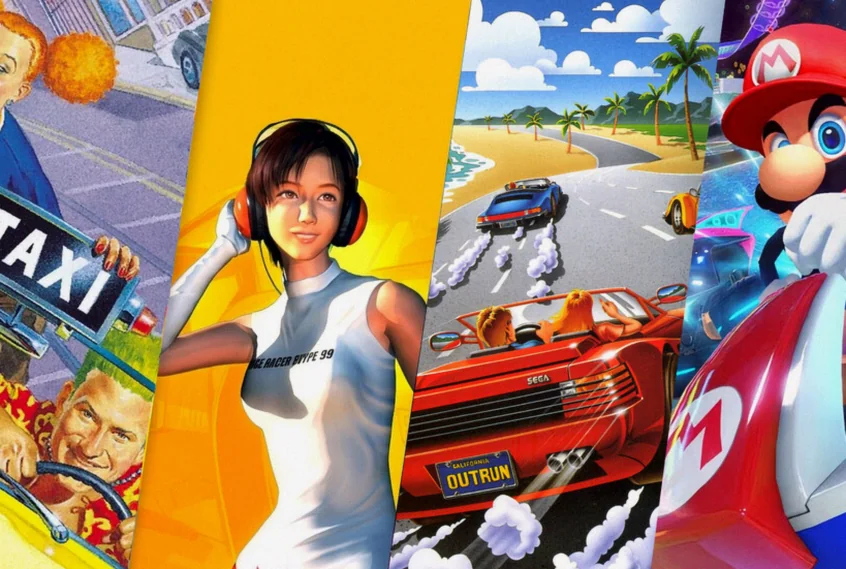
Arcade racing has always been about quick rules and deeper mastery, and the genre’s biggest hits are the ones that turned “one more race” into a habit. From wild transformation tracks to city-sized open-road chaos, these 12 games stand out for impact, variety, and how well they still hold up—whether you’re chasing clean lines or just enjoying the ride.
Quick facts: Top 12 arcade racing picks
- Sonic & All-Star Racing Transformed — released 2012; PS3, Xbox 360, Wii U, 3DS, PC, Vita
- Crash Team Racing Nitro-Fueled — released 2019; PS4, Xbox One, Switch, PC
- Trackmania Nations Forever — released 2008; PC
- Crazy Taxi — released 1999; Arcade, Dreamcast, PS2, GBA, PC, iOS, Android
- Midnight Club: Los Angeles — released 2008; PS3, Xbox 360, PC
- Wipeout 2097 — released 1996; PlayStation, Sega Saturn, PC
- Ridge Racer Type 4 — released 1998; PlayStation
- Need for Speed: Underground 2 — released 2004; PS2, Xbox, GameCube, PC, GBA
- Burnout 3: Takedown — released 2004; PS2, Xbox
- Out Run — released 1986; Arcade, Master System, Mega Drive, Saturn, PC, iOS
- Need for Speed: Most Wanted — released 2005; PS2, Xbox, Xbox 360, PC, GameCube
- Mario Kart 8 Deluxe — original 2014, Deluxe 2017; Wii U, Nintendo Switch (1 and 2)
How these arcade racers were chosen
Arcade racing comes in countless forms, but the common thread is that it’s easy to learn and hard to master. This list focuses on the games that mattered when they launched, brought meaningful variety to the genre, and remain playable or culturally significant today—sometimes as a “killer app” for their platforms.
The selection criteria emphasize originality through impact, variety strong enough to make each race feel different, and lasting appreciation—not just whether a game was good, but whether it still has an audience or a recognizable legacy.
12 arcade racing games worth your attention
Sonic & All-Star Racing Transformed
The big idea in Sonic & All-Star Racing Transformed is that the vehicles automatically transform: they become planes in air sections and switch to boats when you reach water. Track layouts also change turn-to-turn, so you aren’t repeating the exact same line every time.
It leans hard into Sega nostalgia with a roster that includes AiAi from Super Monkey Ball, Beat from Jet Set Radio, and BD Joe from Crazy Taxi. The PC version adds Team Fortress 2 characters, and there was even a concept for a story mode with Dr. Eggman as a disguised villain—though it was ultimately dropped.
Crash Team Racing Nitro-Fueled
Crash Team Racing originally launched in 1999, and this modern entry takes the concept forward with a rebuilt foundation. Beenox brought in additional Crash-era content from Crash Nitro Kart and Crash Tag Team Racing, added a new graphics engine, included online play, and offers extensive customization.
The core remains the turbo system built around chaining boosts through jumps—powerful when you nail the timing. In the UK, the game’s first week put it as the third-best launch of the year, behind Resident Evil 2, and it ultimately surpassed 10 million copies sold (counting this Nitro-Fueled version).
Trackmania Nations Forever
Nadeo released Trackmania Nations ESWC-based content as a free update in 2008, expanding it into Trackmania Nations Forever. It brought 65 tracks, a circuit editor, online time trials, and its own servers.
Because everyone races together with no direct player collisions, the real opponent is the clock. The game has a “Very positive” rating on Steam with over 24,000 reviews, and early on it reportedly supported 250 simultaneous players on a single track.
Crazy Taxi
In Crazy Taxi, the arcade rules were turned on their head. Director Kenji Kanno challenged Japan’s common three-minute-per-100-yen structure by designing a session where playing well can keep it going—faster passenger deliveries extend your time.
The appeal isn’t just speed; it’s performing “the crazy” driving that customers love, earning extra tips along the way. The Dreamcast version became the third-best-selling game on the console in the United States, expanded the map for a “lost in the city” feeling, and paired music from The Offspring and Bad Religion with arcade hardware based on Sega’s NAOMI. Notably, it maintained stable 60 FPS in 1999, and the source claims no later racing game has replicated its style as well.
Midnight Club: Los Angeles
Rockstar San Diego brought an open-world obsession to street racing with a Los Angeles recreation built at real-world scale. The map includes areas like Santa Monica, Beverly Hills, Hollywood, Downtown, and South Central, with some regions delivered as DLC.
The “garage” was smaller than many rivals—43 cars and 4 motorcycles—but it added day/night cycles, variable weather, and real traffic as the most unpredictable obstacle. The game arrived during a weaker period for the street-racing genre on the seventh generation, and the article positions it as likely the last major entry of its type before Forza Horizon reframed the concept.
Wipeout 2097
Released in 1996, Wipeout 2097 is described as both an improvement over the original and a leap forward in identity. It builds on better visuals, physics, tracks, and weapons, while emphasizing anti-gravity ships from the F5000 AG league that push speeds where mistakes become punishing.
The tactical layer comes from shields and weapon use, but the standout difference is its audiovisual signature. The Designers Republic handled visual design, and the soundtrack features artists including The Chemical Brothers, The Prodigy, Underworld, Photek, and Future Sound of London. The piece even calls it one of the earliest “killer apps” of Sony’s first console.
Ridge Racer Type 4
Namco perfected its arcade drift formula with Ridge Racer Type 4 as the culmination of the series’ approach. It includes eight fictional car manufacturers, four teams with narrative identity, and more than 300 unlockable vehicles, alongside progression that mixes team choices with a light but effective story.
The drifting requires precise timing: lift off at the right moment, turn to set the slide, then re-accelerate to launch out. The game also features an electronic jazz soundtrack by Shinji Hosoe, Ayako Saso, and Takayuki Aihara, which the source calls an instant classic. It was among the better-reviewed PS1 games in its release year, and remains a frequent recommendation for PlayStation fans.
Need for Speed: Underground 2
While the first Underground helped define JDM tuning in games, Underground 2 took the theme further. It offers an open world centered on Bayview at permanent night, with more than 100 visual customization parts, four race modes (drift, sprint, circuit, and drag), and dozens of licensed cars.
A major standout feature is customization in real time: you can park at a shop, exit the car, and enter to tune it immediately. The game’s presentation—such as Rachel Teller and the phone that rings when new events launch—is framed as memorable to an entire generation. Its soundtrack blends hip-hop, rock, and electronic styles, and it’s credited as the saga’s peak influence on popular culture, even inspiring people to pursue real tuning and feeding into the momentum of The Fast & The Furious franchise.
Burnout 3: Takedown
Criterion Games pushed a radical premise in Burnout 3: Takedown: losing control and smashing your car is part of the reward. The game’s collision spectacle is described as both morbid and addictive, with the Takedown mode explicitly paying you for destroying rivals using cinematic slow-motion during impacts.
Its turbo system charges as you ride closer to the limit, and the Crash mode tasks you with causing maximum damage at intersections—so much that the source suggests it could have been a standalone game. The soundtrack is tied to the Electronic Arts Music Syndicate and focused on punk rock, and the article calls this Criterion’s creative peak before EA’s acquisition. It also notes the series later faded, with Burnout Paradise failing to recapture the brutality of the original.
Out Run
Out Run is framed as a visionary Sega AM2 project that delivered a fantasy of driving—Ferrari Testarossa, a glamorous passenger, sun in your face, and selectable radio music. It isn’t built like typical racing entries: there are no direct rivals, no positions, and no loss unless you miss a checkpoint timing window.
Route decisions happen via bifurcations after each stage, letting you choose the scenery. The selectable radio tracks—Magical Sound Shower, Passing Breeze, and Splash Wave—are presented as a first-of-its-kind detail for the era. The arcade hardware was also highlighted for a moving seat that reacts to the car, and the article argues that later racing games—including this list—owe it something.
Need for Speed: Most Wanted
Need for Speed: Most Wanted is described as more than a racer thanks to its blacklist structure. You face 15 rivals, each with their own car, personality, and taunts, and you must defeat them one by one to reach the top spot held by Razor. The narrative is simple but effective, supported by real-action cinematic moments.
Police chases escalate dramatically, starting with two patrol cars and potentially ending with helicopters, spike strips, and specialized police vehicles. The piece calls it the best-selling NFS of its generation and a fan favorite across platforms, while also claiming later EA Black Box entries didn’t match the balance of accessibility, variety, and chase spectacle—leading to ongoing calls for a remaster.
Mario Kart 8 Deluxe
Mario Kart 8 landed on Wii U in 2014 with anti-gravity sections where karts drive on walls and ceilings, alongside circuit quality the source says none of the earlier entries matched. The Deluxe release on Switch adds a renewed battle mode, includes all DLC, and supports online multiplayer for up to 12 players.
With additional track packs, the game totals nearly 100 circuits across the series, including revised classics from SNES, N64, GBA, and GameCube. The article states it’s the best-selling Switch title with over 67 million copies, and frames its longevity as proof it’s the best kart racer ever published—claiming even a successor like Mario Kart World on the next Switch model hasn’t dethroned it.
Arcade racing survives because it nails that tight loop: instant fun, skill ceiling, and distinct identity. These 12 games didn’t just deliver fast races—they reshaped how players imagine driving, competing, and replaying the same track until it finally feels perfect.