Valve Says Steam Machines Don’t Need Console-Style Exclusives for PC Gaming
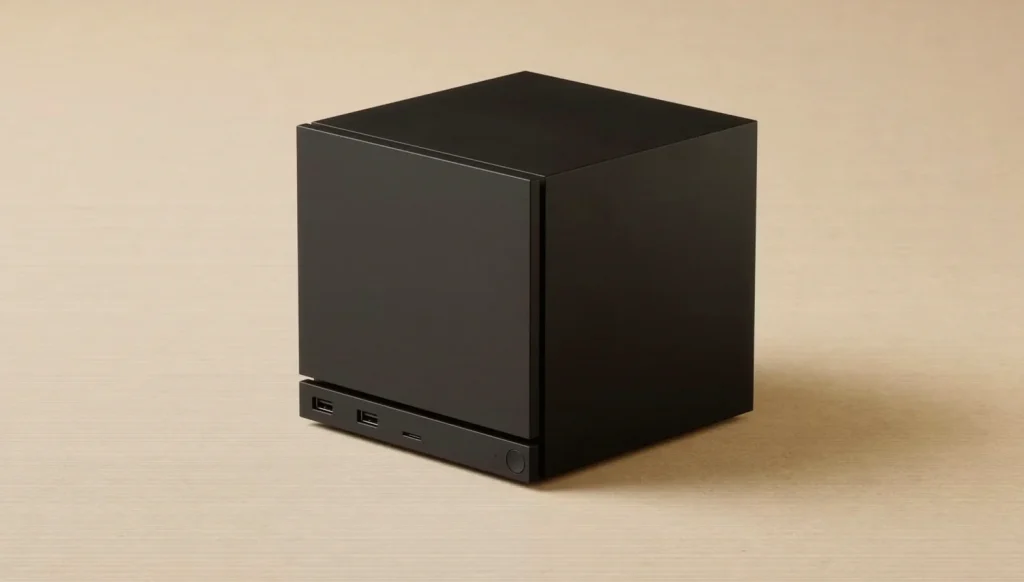
Valve’s approach to the Steam Machine is rooted in one core idea: restricting where people can play is a bad model. A Valve engineer, Pierre-Loup Griffais, argued that the platform should focus on letting users access as many PC games as possible—rather than carving out “console-only” titles that would block players from the wider PC catalog.
Valve’s stance: “Whole PC catalog” over platform lock-in
In comments relayed through Bloomberg, Griffais said Valve is “much more interested” in making the Steam Machine’s “launch exclusive” the ability to play the entire PC catalog through Steam. The Steam Machine’s main pitch, he noted, is that it functions as a console-style device for playing users’ existing Steam libraries.
- Griffais said Valve does not believe restricting where people can play a game is a “great model.”
- He framed the Steam Machine’s key advantage as a catalog-wide launch hook, not a list of closed-off titles.
Why exclusives don’t fit the Steam Machine model
While a console-style PC gateway could theoretically produce “hundreds, if not thousands” of exclusives, Valve’s reasoning is that the Steam Machine cannot practically support that kind of separation. The central problem is simple: if the Steam Machine had games that were not available on PC, it would create a bottleneck for users who rely on the device to access PC gaming.
The argument extends to how Steam Machine exclusives would affect the broader audience. Griffais pointed out that putting a game on the Steam Machine also means putting it on Steam—because Steam is where PC players already buy games, and those players have alternative storefronts.
- Valve views Steam Machine exclusives as unlikely because Steam Machine games are also expected to appear on Steam.
- If a game were blocked from PC, it could upset the “other 99 percent” of Steam users who play on traditional PCs.
- PC gamers can buy outside Steam, including the Epic Games Store and GOG, and in some cases directly from developers or publishers.
- Valve’s approach is positioned as a contrast to how exclusivity works in the console world.
What this means for players—and the console landscape pressure
The comments also tie Valve’s strategy to a wider debate around digital storefront lock-in. The source notes that with PlayStation’s all-digital direction, players on a platform without broad storefront flexibility can’t easily switch where they buy digital games if they dislike pricing or store practices.
Valve’s insistence that the Steam Machine will “never” need exclusives is presented as a potential differentiator as premium console costs rise. The source specifically suggests that if next-generation systems such as PS6 and Microsoft’s Project Helix end up costing above $1,000, more players could consider Valve’s smaller hardware offering—especially if it continues to avoid the exclusives model.
- The source links exclusives debates to the limits of digital storefront choice on modern consoles.
- It also argues Valve’s non-exclusives stance could make the Steam Machine more attractive if future console pricing climbs above $1,000.