
Xbox One X Technical Breakdown: Project Scorpio Specs and Performance Claims
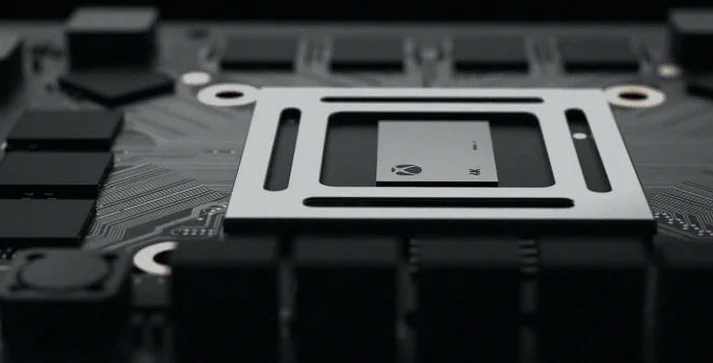
Microsoft’s Xbox One X—still known during development as Project Scorpio—has been shown in more technical detail, with a deep dive into the system’s internals and what it means for running games at higher resolutions and smoother frame rates. The update focuses on the console’s hardware specs and on performance claims demonstrated with existing titles.
Quick facts
- Console name: Xbox One X (Project Scorpio)
- Price: €499
- Release date: 7 November 2017
- GPU: 6 teraflops
- Memory: 12 GB GDDR5 (with a breakdown for games)
- CPU: 8 cores at 2.3 GHz
- Storage: 1 TB HDD
- Target: “true 4K gaming”
- 4K UHD Blu-ray player included
- New performance claims: CPU 30% faster than Xbox One; GPU 4.6x stronger
Design, price, and what’s in the box
Xbox One X is listed at €499 and is scheduled for release on 7 November 2017. The hardware is compact enough to stand vertically, with dimensions of 30 cm x 24 cm x 6 cm and a weight of 3.8 kg.
The included package is described as the console with a 1 TB drive, a wireless controller, an HDMI cable that supports 4K, and a power cable. Bundles also include a one-month trial for Xbox Game Pass and a 14-day trial for Xbox Live Gold.
Core hardware specifications
For raw compute, the console is positioned around “true 4K gaming” and a GPU rated at 6 teraflops. The system uses an 8-core CPU clocked at 2.3 GHz and provides 326 GB/s of memory bandwidth.
Memory is specified as 12 GB of GDDR5. The graphics array is described as 40 custom compute units running at a core clock of 1172 MHz, paired with a 1 TB hard drive. The system also includes a 4K UHD Blu-ray player and support for Blu-ray and DVD playback.
Video, display output, and HDR
On the video side, Xbox One X is equipped with a 4K UHD Blu-ray drive and an HDMI output supporting HDMI 2.0b. Output is listed as 2160p at 60Hz, with AMD FreeSync support.
HDR support includes HDR10.
Connectivity and audio
Connectivity is built around Ethernet/LAN, dual-band Wi-Fi, and multiple USB 3.0 ports. The console also includes IR out and optical digital audio output (S/PDIF).
Audio formats called out include DTS 5.1, Dolby Digital 5.1, and TrueHD with Atmos, plus PCM options for 2.0, 5.1, and 7.1.
Chip details and cooling
The engine is described using a 16nm FinFET process node, produced by TSMC. The chip is said to contain 7 billion transistors, with a die size of 360 mm².
Cooling is compared to what’s used on a GTX 1080 Ti-class solution.
Architecture and Xbox One X features
Architecturally, the CPU is listed as a custom x86 design with 8 cores and a 4 MB L2 cache. The graphics portion is again summarized with 40 compute units at 1172 MHz.
Feature highlights include DirectX 12 support on the GPU, Dolby Atmos for games and headsets, and a 4K Game DVR using an HEVC codec. There’s also mention of frame-by-frame video controls aimed at producing precise screenshots, alongside options like 1080p supersampling for Full HD TV owners and HDMI 2.0b output with FreeSync.
Performance claims with existing games
The performance section focuses on how quickly existing software can be adapted. The Forza engine is described as having been ported to Xbox One X in two days, with prototypes tested using existing titles. The claim is that Forza ran “incredibly fast” without any console-specific adjustments.
Forza Motorsport 6 is cited as running in 4K at 60 frames per second while dynamic effects and maximal vehicles are present, with only 66% GPU utilization reported. The same segment also claims that games previously delivered at 900p on Xbox One could reach native 4K with developer work.
What improves across Xbox One and Xbox 360
Additional claims say all Xbox One and Xbox 360 games run noticeably better on Xbox One X, with maximum resolution and frame rate more often reached (or always achieved, per the statement). Faster loading times are also described across all games.
Among the specific improvements listed: screen tearing is said to be eliminated in Xbox 360 titles, dynamic games are said to reach maximum resolution more consistently, and improved texture filtering is mentioned for available games—including support for 16x anisotropic filtering.
Scale of upgrade vs Xbox One
Beyond the game-specific examples, the update reiterates headline performance figures: the CPU is claimed to be 30% faster than on Xbox One, while the GPU is described as 4.6 times stronger. The message is that the console’s power is not only intended to upscale Xbox One titles toward native 4K, but also to provide headroom for additional effects.