Avatar Legends Review: Nickelodeon Fighting Game Shines, But Feels Unfinished
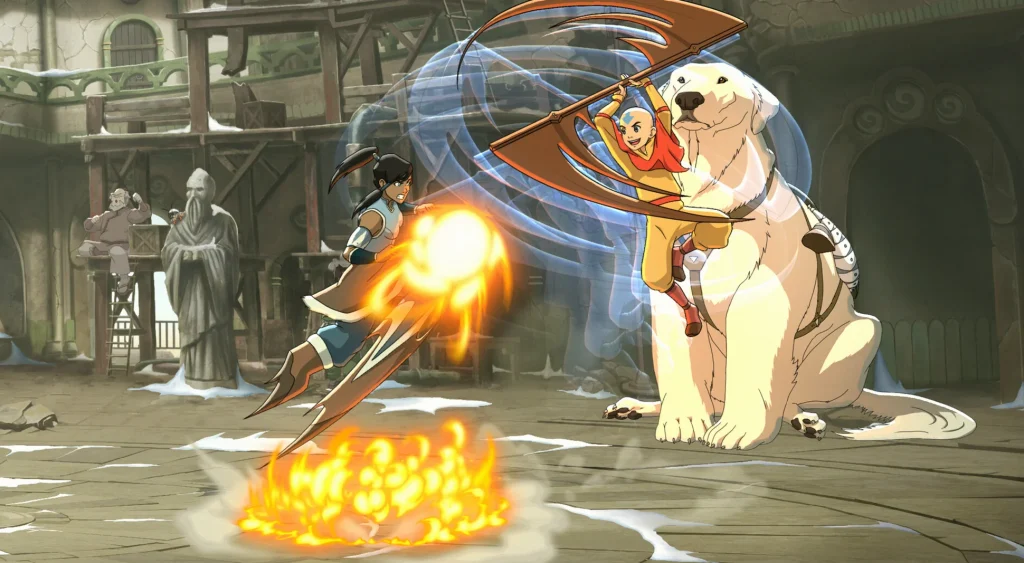
Avatar Legends is trying to prove it belongs in the same conversation as the best licensed fighting games—by delivering a playful, fan-faithful take on Nickelodeon’s Avatar universe—while also showing clear signs of being unfinished in its current state. The experience is strongest when it leans into the series’ visual identity, character differentiation across bending styles, and the childhood-vs-adulthood dynamics that define the shows.
A fighting game built around “bending” identity
Even without a deep focus on execution tech, the game’s approach to combat styles stands out as something fans of the cartoons can recognize. Characters are presented to look and move like their animated counterparts, with modernized clarity where needed. A notable detail is that each character can palette-swap to reflect the four Nations, aligning outfits with the world’s factions.
Support characters also lean heavily into recognizable series lore, featuring a roster of minor but beloved picks such as The Boulder, Joo Dee, and Mai. Story Mode is likewise packed with small Avatar references, including playful touches tied to character abilities—like Aang’s throw move involving an airbender-powered sneeze.
Where the gameplay feels most “Avatar” is in how it translates the shows’ martial arts logic into fight styles. The original series is framed around Nations having distinct signature bending forms inspired by real-world martial arts, while The Legend of Korra shifts toward a more modern MMA-style approach. Avatar Legends reflects that distinction through how different bender types feel, both broadly and within the same element.
- Elemental roles show clear personality: firebenders skew fierce and aggressive, while waterbenders play more defensive.
- Same element, different user: Zuko and Azula both use fire, but Zuko centers on forward momentum and projectiles, while Azula emphasizes lightning-enhanced control.
- Big-picture differentiation supports character fans: Kyoshi’s earthbending focus feels distinct from Toph’s more grounded, space-controlling style.
- Aang vs Korra gameplay contrast is character-accurate: Aang leans into air juggles and quick movement, while Korra’s all-four-elements mastery makes her feel more balanced and easier to chain.
The series’ power imbalance is part of the design
One aspect Avatar Legends makes visible in combat is the show’s recurring theme of children finding their place in an adult world. The game presents child characters as noticeably smaller than grown-ups, a choice framed as essential because the conflict isn’t “teens vs adults” but 12-year-olds versus 40-year-olds. The size difference is treated as more than aesthetics, reinforcing how the world’s scale and threat levels carry over into fights.
What’s holding it back: incomplete tutorials, animation issues, and bugs
Despite the strong character presentation and bending differentiation, the current build raises concerns that it doesn’t feel fully finished. The most concrete gap is in onboarding: the tutorial section appears incomplete, with only Aang’s tutorial available during the reviewer’s playtime. Additional character tutorials are expected at launch, but it’s unclear whether all desired options will be included.
Beyond tutorials, there are presentation and stability problems that can break immersion. During story cutscenes, character idle animations are described as limited and not as smooth as expected. The game also reportedly exhibits bizarre sequence bugs, including characters briefly disappearing and Toph floating in mid-air during conversation moments.
Overall, these issues contribute to a perception that the game currently resembles an early-access state rather than a polished 1.0 release—though the article suggests patches may improve some of the rough edges after launch.
Story and roster choices raise questions about launch-day priorities
The game’s story setup is criticized as a jumbled mess. While the premise—characters from different time periods interacting—creates an obvious challenge for coherent explanation, the rationale offered is described as dull: a “collision of different worlds and destinies.” The criticism is that this functions mainly as a way to combine well-known faces for gameplay variety, with support-character upgrades tied to sampling different characters rather than delivering a compelling narrative reason for the crossover.
Roster inclusions also generate skepticism around what the game prioritizes now versus later. Avatar Legends includes many major names: the core four heroes, villains such as Zuko, Azula, and Ozai, and avatars Korra and Kyoshi. However, the inclusion of Zaheer is called out as feeling out of place compared with the rest of the cast at launch. At the same time, the omission of Iroh or avatar Roku is labeled a strange choice, especially when other Korra-era figures like Amon or Asami might have fit more naturally into the core lineup.
The article suggests the roster strategy may be influenced by plans for a season pass, implying that some popular characters are being held back for future post-launch content. Even with that explanation in mind, the current lineup reinforces the feeling that Avatar Legends is on the verge of something bigger—if it can mature past its unfinished spots and tighten its narrative and content decisions as it continues to expand.