The Sinking City 2 Review: Frogwares Ditches Detective Roots for Survival Horror
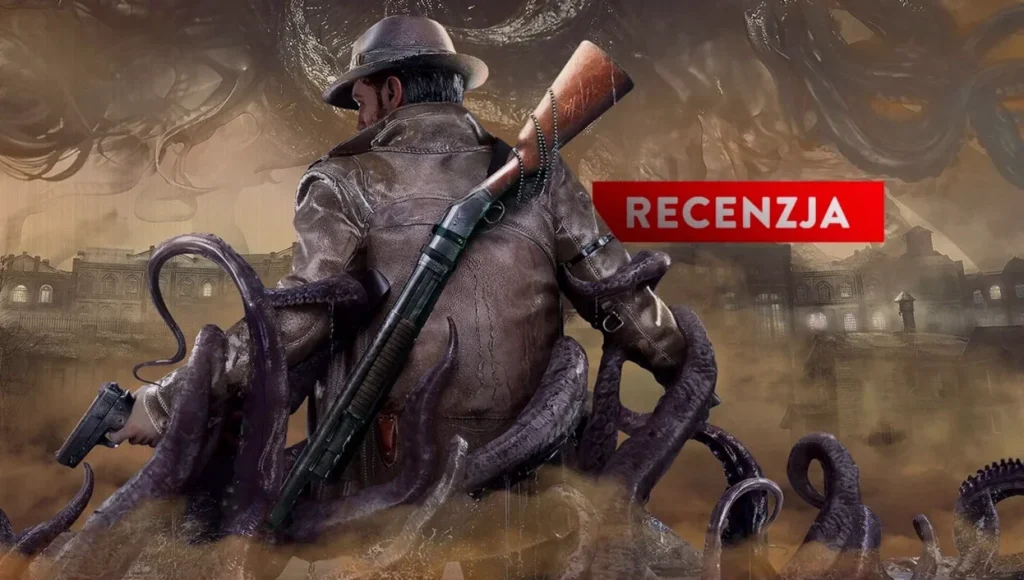
The Sinking City 2 makes a high-risk pivot away from its detective-and-investigation roots and into straight survival horror—swapping open-world roaming for tighter dread, limited resources, and combat-focused tension. The result is a game that leans into classic horror pacing, with environmental puzzles and gunplay that feel meaningfully improved over the first entry.
Quick facts
- Core change: The sequel abandons the first game’s investigation structure and open-city exploration for survival horror.
- Setting: The story begins in Arkham, then moves through key locations such as a hotel, a hospital area, and a fish market.
- Difficulty: Four difficulty settings—“Sweet Dreams,” “Restless Dream,” “Hard Night,” and “Demon of the Dream.”
- Progression: The character system uses a limited talent pool that is expanded through a new-game-plus mode called Ex Obliviante.
- Performance: Console performance is described as stable; PC optimization is a recurring concern, especially on AMD GPUs due to missing FSR support.
Arkham opens with evacuation panic—then the city feels secondary
The sequel’s adventure starts after Calvin Rafferty says goodbye to his girlfriend, Faye. Calvin sets out to find a book he believes can wake her from a mysterious state of unconsciousness—only for Arkham to immediately erupt with sirens and emergency messages that frame the situation as the final evacuation.
Along the way, the player hears signs of chaos—cries, arguments, and signs that people are trying to push their way out—but Calvin arrives at many moments after the fact, often learning what happened through audio cues or piles of bodies that quickly reanimate. This approach, combined with stage design that stops short of sustained city exploration, noticeably weakens the sense of a living, investigable place.
The first major location is a hotel that acts as the centerpiece of the opening act. The stage is tied to a siren performance that drives guests into mutual violence, with later notes implying what occurred. The impression is that the horror hits harder when the player reaches the scene before the “performance” rather than after it has already turned catastrophic.
Survival horror loop: limited inventory, optional fights, and a stronger arsenal
The Sinking City 2 commits to the survival horror formula in practical ways. Inventory starts with just 6 slots and can be expanded up to 20, forcing frequent decisions about what to carry and what to store—especially since crafting ammunition and healing items encourages back-and-forth trips to a safe space.
Enemies aren’t always something you must defeat. The game discourages mandatory combat by having some encounters where winning isn’t required and enemies do not drop useful items. Still, when combat starts, the weapon choice matters: pistol, shotgun, submachine gun, rifle, and grenade launcher are all present.
The gunplay is described as a standout improvement. Different weapons are said to behave distinctly, and enemies can be visibly thrown back by explosive force or raw impact. The player also highlights a specific shotgun upgrade that adds an axe-shaped muzzle attachment, increasing damage and pairing with a close-quarters damage-boosting mechanic when the magazine is empty.
Not every fight is comfortable, though. The fish market segment is singled out as a pressure point where enemies arrive in repeated waves and the player must manage levers while waiting for windows to act. The review notes that the developers appear to expect the player to have the grenade launcher by that stage, yet the reviewer’s copy had it locked away in a stash.
Sound design and environmental puzzles lead the horror
Atmosphere in The Sinking City 2 is built heavily through audio. When entering a safe room, a calm melody plays from a gramophone, but outside it there’s near-constant silence broken by falling objects, enemy noises, and unsettling sound cues. The reviewer specifically recommends headphones, arguing the experience is far more intense when you can fully track those details.
Puzzles also receive the strongest praise. Investigations in the sequel are streamlined compared with the first game, and instead of assembling a full evidence set for detective-style progress, the puzzles become environmental challenges that rely on reading messages and observing what the map marks. The reviewer says the puzzles stay varied and avoids the fatigue they felt in Silent Hill 2, even when the underlying pattern is similar—like finding code items and opening locked passages.
There is one notable snag with the Polish translation: for a side puzzle, the player had to switch the game language to English to understand a solution, and the reviewer adds that the clue would likely require an expert level of fishing knowledge.
How long it takes, and what difficulty changes
Time-to-complete is estimated at around 10 hours, with the exact duration varying based on skills and selected difficulty. The reviewer frames this as an ideal length for the survival horror genre, since the game is described as full of content rather than stretching out.
The game offers four difficulty levels and allows the player to switch between them during gameplay. However, achievements are tied to the lowest difficulty selected. On “Sweet Dreams,” the game can additionally grant total invulnerability to damage or immortality, while the reviewer chose “Restless Dream” as the normal baseline.
Talents require side content, but the game hides details
While the game presents optional content—extra cases, puzzles, and locked containers—the reviewer says skipping it has limited value because it affects progression and rewards. Unlocking talents is tied to earning points from correct evidence matches and many side tasks, and completion doesn’t automatically max everything.
Talent counts in the system are described as 15 standard talents and 7 “elite” talents, with four elite options only unlockable after completing the game once. Calvin’s mask enables simultaneous use of three standard talents plus one elite talent, but not all slots are available immediately and require point investment.
The reviewer criticizes the talent descriptions for being too vague to evaluate properly. Two examples are given: “Instruments of Death,” which improves attacks briefly after changing weapons, and “Unusual Dodge,” which improves how the body handles attacks briefly after dodging. The complaint is that the text doesn’t specify the exact duration or measurable effect, making optimization harder—especially because higher difficulties make every point and resource more important.
Ex Obliviante: a new-game-plus rework with early weapons and unlimited ammo
Ex Obliviante is positioned as more than a traditional new-game-plus. It preserves previously unlocked talents but also lets players start with an immediate “kickoff” thanks to a system of achievement rewards called “spooky accomplishments,” granting “spooky points.” Those points are used in the main menu under an add-ons section.
Spendable rewards include concept art, character outfits, and flashlight color options. More importantly for gameplay, the mode also allows purchasing weapons that appear directly in the stash without needing to unlock them again. The reviewer notes that unlimited ammunition is available in theory, including the possibility of starting with a grenade launcher and unlimited ammo—though reloading still applies.
Notably, Ex Obliviante does not carry over inventory size or weapon upgrade progress. Notes are, however, found from the beginning, and the mode adds eight new documents centered on Calvin and Faye’s personal lives. Calvin reacts to those papers in a way that creates additional unease, filling a gap the reviewer felt existed in the base game.
Performance: stable on Xbox Series X, uneven on PC, missing FSR on AMD
The sequel is built on Unreal Engine 5, and the reviewer’s expectations weren’t high due to the studio’s past performance reputation. On Xbox Series X (in the reviewer’s testing), the game is described as working correctly and looking pleasant, with no reported stutter or framerate drops even during intense moments.
On PC, performance is reported as inconsistent. Other reviewers are cited as reporting that at 1440p on an RTX 4080 paired with a Ryzen 7 7700X—using Ultra settings with DLSS on Quality—the game didn’t maintain consistently high framerates. The open-area Arkham segment is said to average roughly 80–100 FPS, while the hospital-focused segment drops to around 50–60 FPS.
AMD users are described as facing the worst situation. The game reportedly does not support FSR at launch, with the rationale given as AMD not having prepared the necessary update for Unreal Engine 5.8. Without upscaling, maintaining optimal framerate on those systems is portrayed as difficult, while consoles remain the safer option.
Bottom line: a strong survival horror for genre fans, with clear translation and tuning issues
The Sinking City 2 is fundamentally different from the first game. Where the original emphasized open exploration and detective-style investigations, the sequel is a survival horror entry with improved combat, meaningful decisions about when to fight, and a focus on environmental puzzle variety. The reviewer suggests that survival horror fans are likely to find it compelling.
However, there are downsides: PC optimization needs work, the Polish localization has at least one puzzle-breaking issue, and talent descriptions are too general for players who like to plan builds carefully. If you’re considering playing on PC, the reviewer’s recommendation is to wait for early optimization updates, while console players are described as having a smoother experience.