Avatar Legends: The Fighting Game Review—Switch Launches July 23, 2026
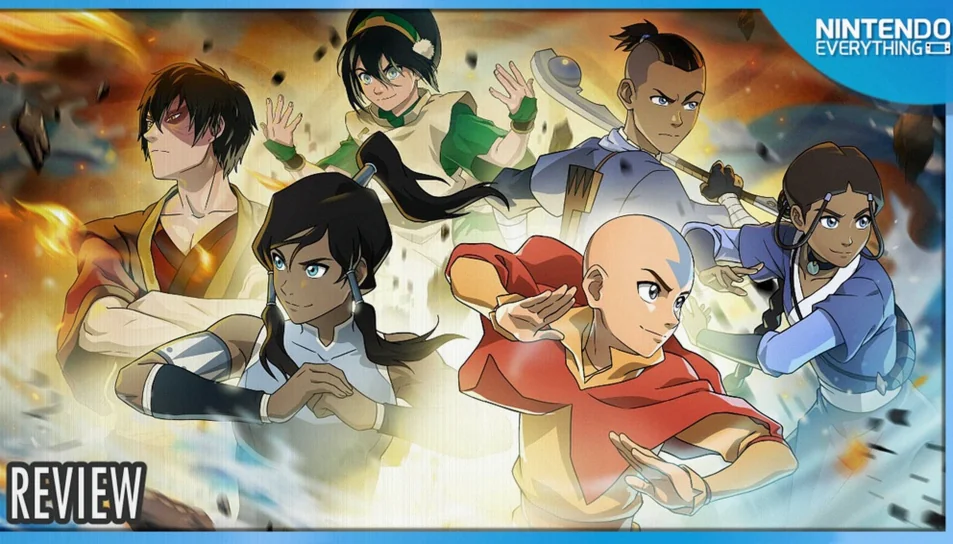
Avatar Legends: The Fighting Game, a new 2D one-on-one fighter for Nintendo Switch, launches on July 23, 2026 after a rocky development history that included an earlier cancellation. Developed by Gameplay Group International and published by PM Studios, the game blends a crossover-style story with an elements-focused moveset, then adds single-player mission combat, arcade-style mini-plots, and online matchmaking—while also arriving without some conveniences players may expect, such as a difficulty slider.
Key takeaways
- Avatar Legends: The Fighting Game releases July 23, 2026 on Nintendo Switch, developed by Gameplay Group International and published by PM Studios.
- The story follows Aang waking in a world where friends don’t remember him and Kyoshi remains alive, with major character personalities dramatically altered.
- Combat is built around a four-button system (light, medium, heavy, plus a flow button), with attacks changing based on standing, crouching, or jumping states.
- Alongside story missions, the game includes an unvoiced Arcade Mode with character-specific short narratives and a mission select featuring 25+ chapters.
- Online support includes matchmaking with Switch users (no cross-play) and private lobbies via a code, but lacks friend lobby options.
- Players report missing features at launch: no difficulty selection beyond a single standard setting, no dedicated costumes/skins, and limited Training Mode controls.
Story setup and how progression works
The game’s narrative is outlined by Avatar co-creator Michael DiMartino and written by Time Hedrick. It begins with Aang waking up in an unfamiliar setting where his allies don’t recognize him and Avatar Kyoshi—who precedes Aang in the line—still lives. Under the premise that only one Avatar should be active at a time, Aang senses something is “off” in the world’s chi and begins investigating.
As the plot unfolds, familiar characters behave in ways that don’t match their usual roles: Toph is presented as pursuing world domination, Sokka is depicted as a sage with power that can rival the masters of the four elements, and Fire Lord—now Phoenix King—Ozai is framed as trying to maintain peace between kingdoms to build a future for his children, Zuko and Azula. The story later ties together why timelines appear to be converging, why characters aren’t acting as they normally would, and who is responsible for the resulting catastrophe.
Story progression is structured like the TV series’ episode format, with a mission select spanning more than 25 chapters. After completing missions, previously played chapters can be selected again freely, allowing players to revisit specific fights or scenes.
Arcade Mode, voice work, and character presentation
Outside the main story, Arcade Mode provides short, character-specific scenarios. These are not voiced, but they center on distinct premises: Aang fights to help Momo after overeating, Toph enters a multirealm tournament to prove she is the strongest earthbender across time, and Sokka challenges stronger opponents to test his sword skills and surpass Master Piandao.
Voice acting is a major point of emphasis in the main story. While players may notice that the TV cast is not used for the characters, the game’s new voice cast is presented as effectively capturing the roles. The description highlights Vivian Vencer for Toph—who also serves as the menu and match announcer—and points to Suzie Yeung as Azula, noted as sounding extremely close to the original portrayal by Grey DeLisle. The game’s story cutscenes use in-game sprites and artwork rather than fully animated sequences, with performance doing the heavy lifting to keep scenes engaging.
How the fighting system and roster are built
Avatar Legends: The Fighting Game is a 2D fighter built around 1v1 battles with the standard objective of reducing the opponent’s health bar to zero. The game uses four buttons—light, medium, heavy, and flow—while attack behavior changes depending on whether your character is standing, crouching, or airborne.
Movement and combo planning are emphasized, with flow movement described as central to getting the best results. Super combos are triggered through directional input combined with simultaneous light, medium, and heavy presses. Throw attacks are described as requiring light input paired with flow. The flow meter is limited, and excessive use can deplete it and significantly restrict movement. The game also includes EX special moves, and each fighter’s special toolkit is tailored to their series fighting identity.
Examples given include Aang using glider and staff elements alongside airbending, Sokka fighting with a space sword and boomerang as a non-bender, and Korra using all four elements with a brawler-style approach. The roster includes fan favorites and additional picks such as Kyoshi and Zaheer. Zuko, Azula, and Ozai are playable and all can use fire-related mechanics, with Azula featuring stance switches based on her sanity and Zuko incorporating Blue Spirit sword techniques in some moves.
Support characters, stages, and what’s included offline
Beyond the playable characters, each fighter is paired with three support characters drawn from the series. These supports are not voiced, but appear in the background with unique animations similar to team companions in other fighters. They provide gameplay modifiers such as access to unique moves, new flow techniques, or upgrades to special moves.
Support examples include: Aang with Gyatso, plus Appa and Momo; Sokka with Suki, Princess Yue, and Master Piandao; and Toph with earthbending wrestlers/mercenaries The Boulder and The Hippo, along with the Badgermole. Support benefits are described as affecting each fighter’s overall toolkit rather than just cosmetics.
Offline features include Training Mode, local play versus another person or CPU, and a gallery of art, sketches, music, and collectible items. Collectibles can be earned by completing Arcade Mode runs or purchasing items using in-game currency gained through story progression.
Online features and launch limitations
Online play includes basic matchmaking with other Nintendo Switch users, and cross-play is not currently included. Players can also create private lobbies using a special code. Training Mode is present, but reporting suggests its UI and control options are not ideal, with dummy settings described as limited and some functions difficult to access.
Several quality-of-life requests are highlighted as missing at launch. There is no difficulty slider: story mode, arcade mode, and local versus reportedly all use a single standard difficulty, with no option to lower or raise challenge. Online friend lobbies are also not available, and the game only offers alternate color schemes rather than dedicated costumes or skins—meaning specific outfit requests from the show are not included. The Nintendo Switch version is also described as not currently providing a way to buy an upgraded edition with the season pass, though developers are said to have assured players this will arrive “in the near future.”
Other reported issues include occasional story-mode sprite glitches (such as characters appearing to stand on thin air or animations not fully cycling), and typos/grammar errors in some Arcade Mode ladders. The main gameplay is described as smooth and fun, but the review positions these problems as areas the team has already flagged for future patching.
Planned post-launch content
While the game is already live on Switch, updates and feedback are expected to address the issues noted above. Additional fighters are planned via a season pass that includes Ty Lee and Uncle Iroh, and the game is also described as receiving a free DLC fighter to promote a recent Avatar film.