South Korea Set to Cut Military Exemptions for Elite Footballers
South Korea’s military-service exemption system for elite athletes is facing a major review after Culture, Sports and Tourism minister Choi Hwi-young said the scheme will have to be reduced, following a backlash over footballers celebrating their exemptions.
Government signals a tougher approach
Speaking at a recent National Assembly committee hearing, Choi said the policy had helped leading athletes and artists continue their careers, but argued that public attitudes towards fairness and compulsory service had changed.
The exemption framework has operated for more than 50 years, yet Choi indicated that its broad reach is no longer sustainable. He said a fresh, wide-ranging review was needed as perceptions of military duty had shifted.
All able-bodied South Korean men are normally required to complete between 18 and 21 months of active service before turning 28. Athletes who win an Olympic medal or an Asian Games gold medal can currently avoid full service, completing under a month of basic military training instead.
Football celebration triggered the row
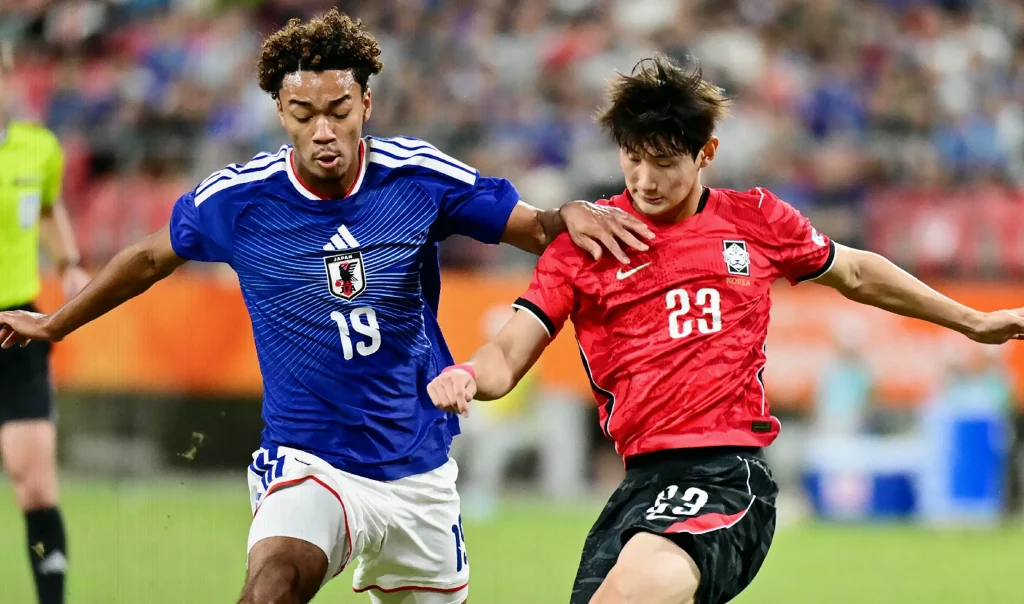
The political pressure intensified after South Korea beat hosts Japan in a final and members of the squad celebrated the exemptions that came with their gold medals.
Captain Lee Gi-hyuk was filmed holding his medal and declaring that he would not be joining the military. The clip spread rapidly and prompted anger among members of the public who regard service as a shared national obligation.
Lee later apologised, but Choi called the remarks “extremely immature” and the episode has become central to the argument that leading athletes receive excessive favourable treatment.
How the exemption debate developed
- South Korea’s football team defeated Japan, the host nation, in the final.
- The gold-medal success brought military-service exemptions for qualifying players.
- Lee Gi-hyuk’s public celebration of avoiding service went viral and caused a strong public reaction.
- At the National Assembly hearing, Choi said the exemption system should be scaled back and comprehensively reconsidered.
Political concern over unequal benefits
Democratic Party of Korea politician Cho Kye-won challenged the present rules during the hearing, saying they create a serious feeling of unfairness among younger people.
Cho highlighted the difference between the recognition given to Asian Games champions and athletes in other disciplines. A world title can be harder to win than an Asian Games gold, he argued, yet world champions in numerous sports receive no equivalent service concession.
He also pointed to the concentration of exemptions in major team sports: 36 of the 44 athletes who qualified for the benefit at the Asian Games came from football and baseball.
Key takeaways
- South Korea’s government is preparing to reassess the decades-old athlete exemption policy.
- Olympic medallists and Asian Games gold medallists currently receive a sharply reduced military obligation.
- Football’s celebrations after victory over Japan have intensified scrutiny of the system.
- Politicians are questioning why exemptions are heavily concentrated in football and baseball while some world champions miss out.
- Any reform could have significant implications for professional footballers approaching the age limit for active service.