Infinity Ward Says Call of Duty: Modern Warfare 4 Returns to “Big War” Roots
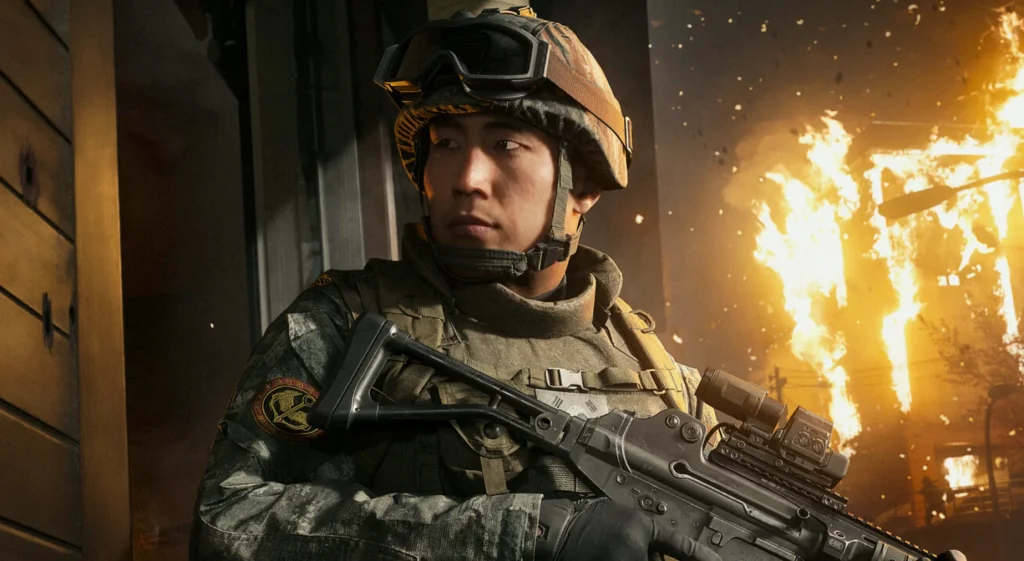
Call of Duty: Modern Warfare 4 is set to continue the Captain Price and Task Force 141 saga with a campaign that picks up after Modern Warfare 3, while also redesigning the game’s DMZ mode to be a fully integrated, dynamic experience. During a hands-off press presentation led by studio co-head Mark Grigsby, the team laid out how the story, map, and “big war” structure are intended to blend into a broader sequel-like multiplayer framework.
Quick facts
- Campaign takes place after Modern Warfare 3, wrapping up the Makarov storyline and creating a new series status quo.
- Captain Price is positioned as a rogue agent whose choices clash with the U.S. government and his former Task Force 141 allies.
- The world crisis centers on a conflict spanning North Korea, South Korea, and Price’s rogue unit, with storylines planned to converge.
- Story locations mentioned include Russia, Korea, and New York City.
- About half of the game is described as “war” levels, with the rest focusing on tactical spec ops gameplay.
- DMZ is being rebuilt as a fully enclosed, in-game “game within the game” tied to campaign events.
- DMZ takes place on the Hajin map across South Korea, North Korea, and Russia, with the Russian area arriving in later seasons.
- Dynamic weather is promised, including effects like rain washing away footprints and fog reducing visibility.
Campaign follows Price after Modern Warfare 3
The single-player story is scheduled to run after the events of Modern Warfare 3, where it aims to bring the Makarov arc to a close before shifting the series into a new equilibrium. Grigsby described Captain Price as operating outside normal channels, acting on his own terms and doing things that violate established rules—much to the frustration of the U.S. government and his old Task Force 141 allies.
Grigsby specifically teased the campaign’s tone around Price going rogue, saying the character will carry out “dastardly” actions that break the rules and push him “out of the system.” The studio also framed the narrative as new territory for the franchise rather than a direct continuation of old beats, suggesting the campaign will reshape how the conflict and alliances operate moving forward.
Three fronts in Korea, with a convergence planned
The presented campaign setup revolves around a Korean conflict that threatens to escalate into full-scale war. Players will experience events across three connected strands: North Korea, South Korea, and Price’s rogue unit.
Grigsby said the three storylines will “ultimately” converge into a grand finale, though the exact structure of that endgame was not detailed. The team also highlighted an open world map concept where South Korean forces are trapped behind enemy lines in North Korea, positioning the Korean fronts as both separate and interlocking parts of the campaign experience.
Locations range from Russia to New York City
Beyond Korea, the campaign is described as using varied locales, including Russia and the streets of New York City. The intent is to move the story through multiple theaters while keeping the overarching conflict connected to the same central crisis.
On authenticity, the studio said it hired South Korean advisors to support the depiction of dialect, culture, and actors’ performances. Grigsby noted that the team made changes to writing and story beats based on feedback from a dialect coach, who also works with the different actors and their lines, with continued input collected across the production.
More “big war” sequences, not just smaller squads
Modern Warfare 4 is also aiming to return to the larger-scale conflict feel associated with earlier entries in the series. Grigsby contrasted the approach with the rebooted Modern Warfare titles, which he said tended to emphasize smaller special operations units.
Instead, the studio is targeting a split where roughly 50% of the experience consists of “war” levels, with the remainder focusing on tactical spec ops action. Grigsby said the team wants to restore the “big war” feeling, positioning the campaign as a balance between large set-piece combat and more mission-style tactical gameplay.
DMZ becomes a campaign-linked, fully enclosed mode
DMZ—Call of Duty’s extraction shooter spin—was previously introduced in Warzone during the Modern Warfare 2 era as an early take on the format. For Modern Warfare 4, Grigsby described the new version as fully enclosed as part of the main game and positioned as a sequel to the campaign events.
In this setup, players will be able to revisit campaign moments from the new perspective of DMZ and see the aftermath. The studio framed DMZ as a “game within the game,” with free roam, dynamic ops, story missions, and boss battles—while emphasizing that gameplay will change constantly rather than following a single static route.
Hajin map spans Korea and Russia; weather affects play
DMZ is set on Hajin, a new map that spans South Korea, North Korea, and Russia. The Russian portion of the area is expected to be added in later seasons, while the rest of the map is part of the initial DMZ environment.
The presentation also highlighted dynamic weather that can include sun, rain, and snow, with gameplay consequences tied to conditions. Grigsby gave examples such as rain washing away footprints and fog impacting visibility, indicating the weather system is meant to influence how players move and fight, not just how the map looks.
Studio competition, now shared across the same engine
Asked about the old Infinity Ward versus Treyarch rivalry, Grigsby described a more cooperative atmosphere today. He said the studios keep in touch, share ideas to avoid stepping on each other’s work, and are operating on the same engine—making the current relationship “nicer” than the earlier days.
Even with that, Grigsby acknowledged there is still a bit of competition, but framed it as healthier in the present, with collaboration and cross-pollination continuing alongside a desire to stand out.